← All Eras
Era 1 of 6 · pre-1870s–1928

Municipal & Hospital-Based Ambulance Foundations

The birth of organized emergency transport

From Civil War battlefields to the first municipal ambulance services, the foundations of emergency medical transport were laid through innovation, conflict, and civic reform.

47 documented events
1861 2 events

President Lincoln Establishes the U.S. Sanitary Commission

President Lincoln's creation of the U.S. Sanitary Commission significantly improved battlefield medical conditions, introducing organized sanitation, nursing, and medical supply logistics. This model set an enduring precedent for coordinated emergency medical responses, directly influencing the structured organization of modern EMS systems.
Read more

The Commission was created on June 13, 1861, and its operations were led by Frederick Law Olmsted, who later became famous for designing New York's Central Park. Olmsted's leadership helped professionalize and standardize wartime medical care. The organization worked directly with the Union Army to inspect camps, organize supplies, and reduce disease—pioneering techniques still used in disaster and field medicine today.

Read more from the National Park Service

National Event

U.S. Civil War – Origins of Modern EMS

The Civil War marked a turning point in battlefield medicine and emergency transport. Surgeon Major Jonathan Letterman created the first organized military ambulance corps and implemented structured triage, field hospitals, and forward aid stations. His system drastically reduced mortality and became the blueprint for modern EMS. Civilian efforts, such as the U.S. Sanitary Commission, also laid the foundation for logistics, nursing, and public health in emergencies.
1862 1 event

Surgeon Major Jonathan Letterman Forms the U.S. Army Ambulance Corps

Letterman introduced systematic field triage and forward aid stations, drastically reducing battlefield mortality. This methodology laid the essential groundwork for modern triage systems and structured ambulance transportation, establishing principles still central to EMS practices today.

Watch the short documentary from the National Museum of Civil War Medicine .

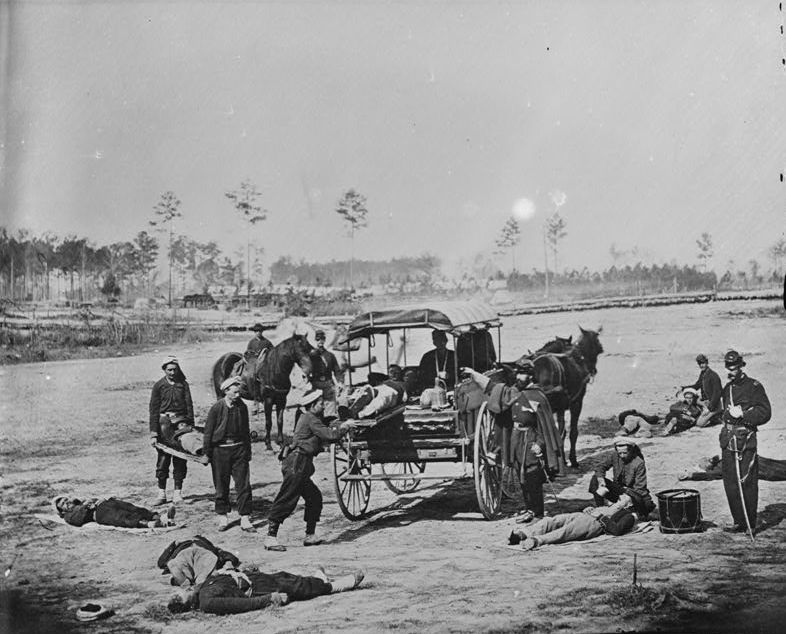
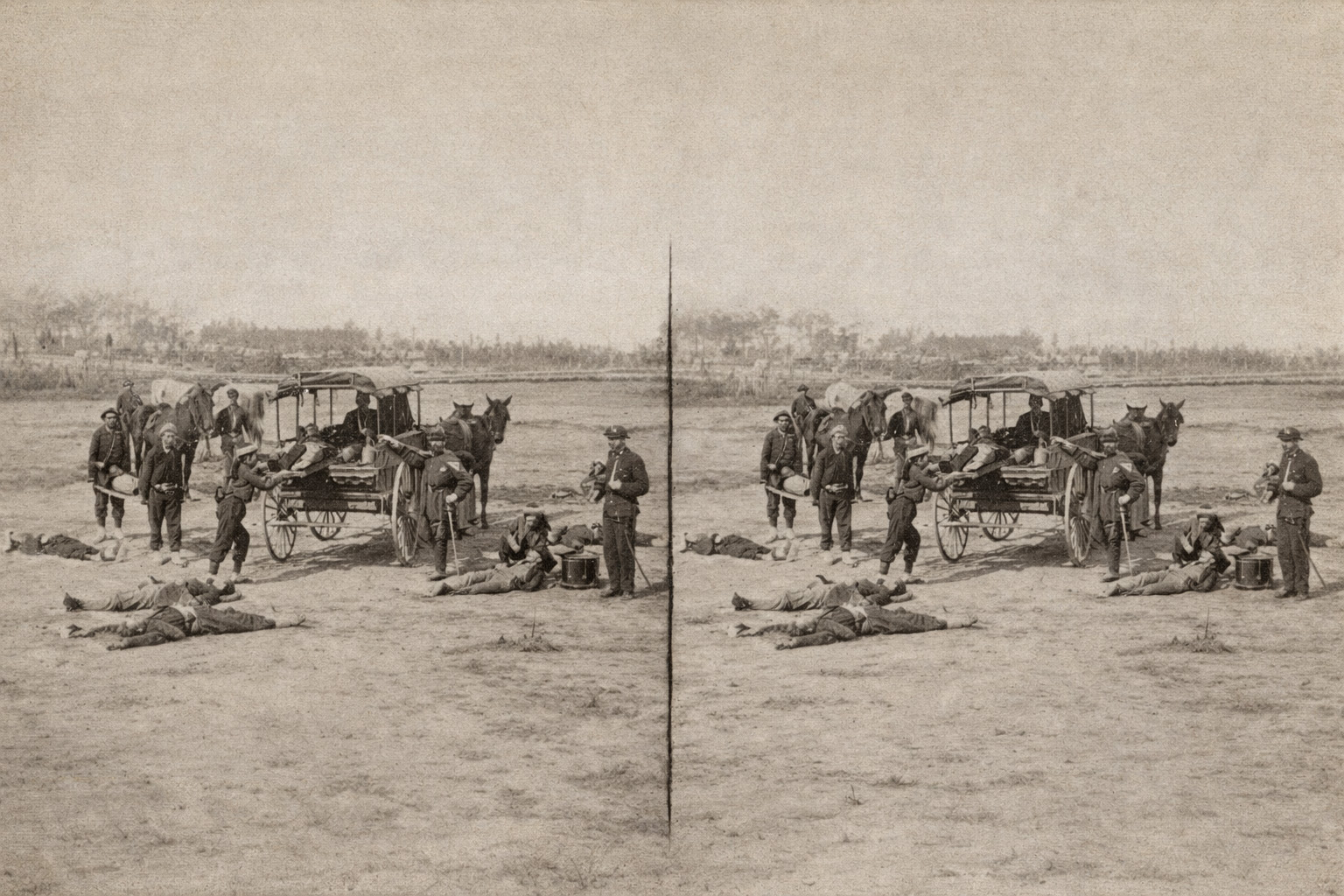
Ambulance Corps removing wounded

1860s illustration showing the Ambulance Corps evacuating wounded soldiers (via Wikimedia Commons)

Read more

Known as the "Father of Battlefield Medicine," Letterman revolutionized military medical logistics during the Civil War. He implemented the first organized system for evacuating and treating wounded soldiers based on severity, assigning medical personnel to ambulances and creating a tiered response system. His innovations became the blueprint for modern military and civilian EMS operations.

Read more from the National Park Service

Read Major-General McClellan's General Orders Number 147

1863 1 event

Cincinnati Lancet & Observer Calls for Congressional Reform

The advocacy by the Cincinnati Lancet & Observer—a leading peer-reviewed medical journal of the time—highlighted inefficiencies in military ambulance practices, raising public awareness and pressuring governmental reform. This marked an early push toward formalized ambulance services, shaping both civilian and military EMS policies.
Read more

The journal reported: “A movement has been inaugurated by the leading Boston physicians, urging upon Congress the investigation of our American system of army ambulances, and praying for the enactment of a law which shall provide for a better system which shall have uniformity and efficacy.” This editorial marked a significant moment of professional medical advocacy, demanding federal action to improve battlefield care—laying the groundwork for future systemic EMS reforms.

View the original source document

Full Cincinnati Lancet & Observer (PDF)

1865 2 events

First Civilian Ambulance Service Launched

Cincinnati’s Commercial Hospital launched the first known civilian ambulance service in the United States in 1865. This initiative marked a critical turning point in the evolution of emergency care—transitioning ambulance operations from a strictly military model to one rooted in public health and civilian need. It set an enduring precedent for municipal EMS systems and remains a key milestone in the professionalization of emergency response.
Read more

City records from 1865 document the appointment of a paid ambulance driver at Commercial Hospital, formalizing the role of ambulance services in urban civilian infrastructure. This historic move helped anchor the future of city-managed EMS and laid the groundwork for modern 911 systems.

View historical reference

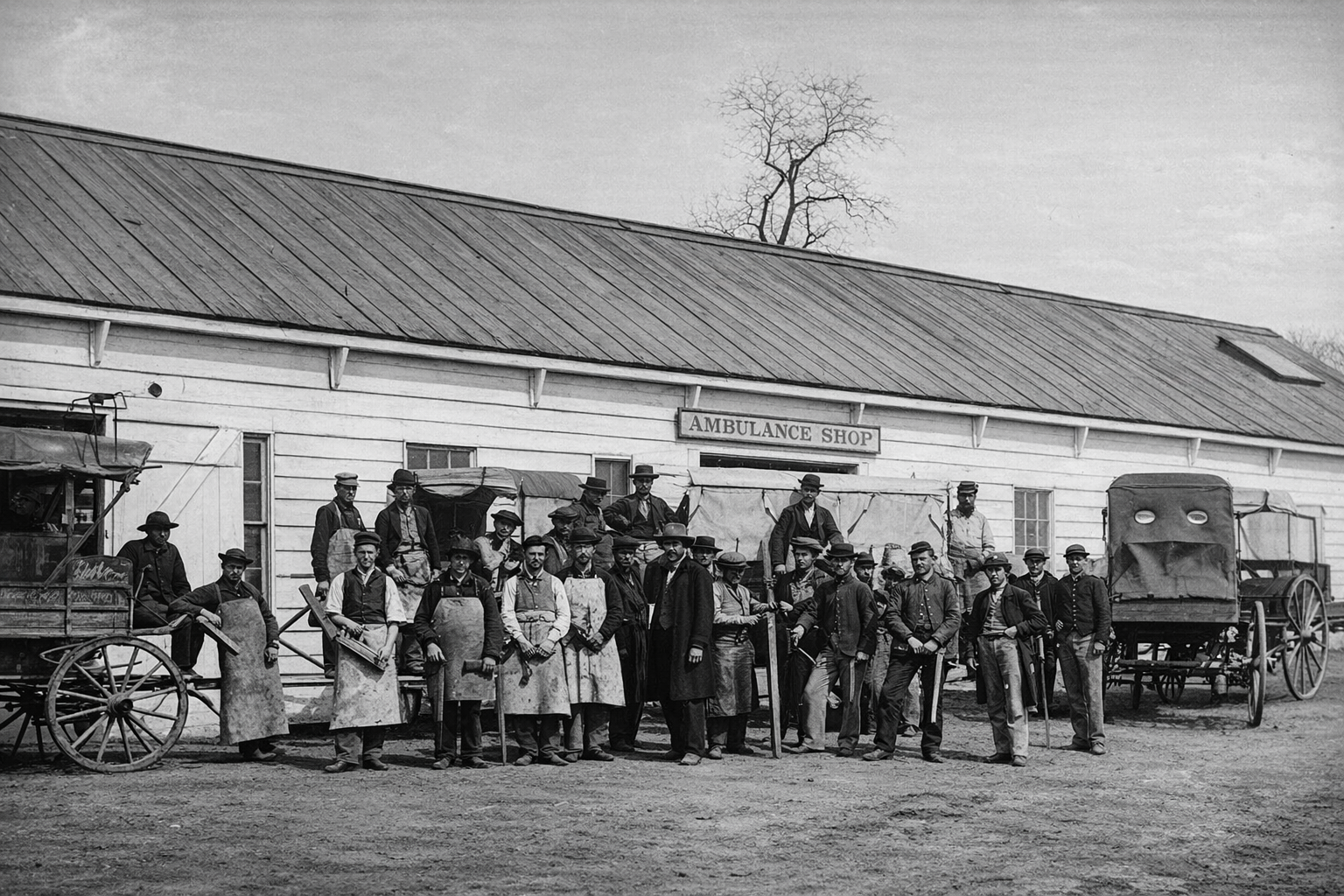
First Known U.S. Ambulance Garage

Maintenance challenges for ambulances are not new. This photograph from Washington, D.C., circa 1865, depicts what is likely the first known ambulance garage in the United States. Workmen stand outside the Ambulance Shop, part of the U.S. Army’s Ambulance Corps, which often struggled with poor upkeep and lack of supplies. Captain Pierce famously noted he couldn’t even obtain paint for basic maintenance. This garage served as a critical, if under-resourced, site for maintaining ambulance wagons and horses.
Ambulance Garage 1865
Library of Congress #2018667013
1868 1 event

History and Description of an Ambulance Wagon

Thomas Wiltberger Evans, an American dentist known for treating royalty and heads of state, published a detailed account titled History and Description of an Ambulance Wagon Constructed in Accordance with Plans Furnished by the Writer. Though not a physician or military officer, Evans applied his precision and creativity to improve battlefield medicine. His design influenced later ambulance transport innovations and earned him international recognition.

Fun Fact: Evans was awarded the Grand Croix of the Légion d'honneur and famously served Napoleon III.

Source: Google Books – Full Document
1869 1 event

New York City Launches Its First Municipal Ambulance Service

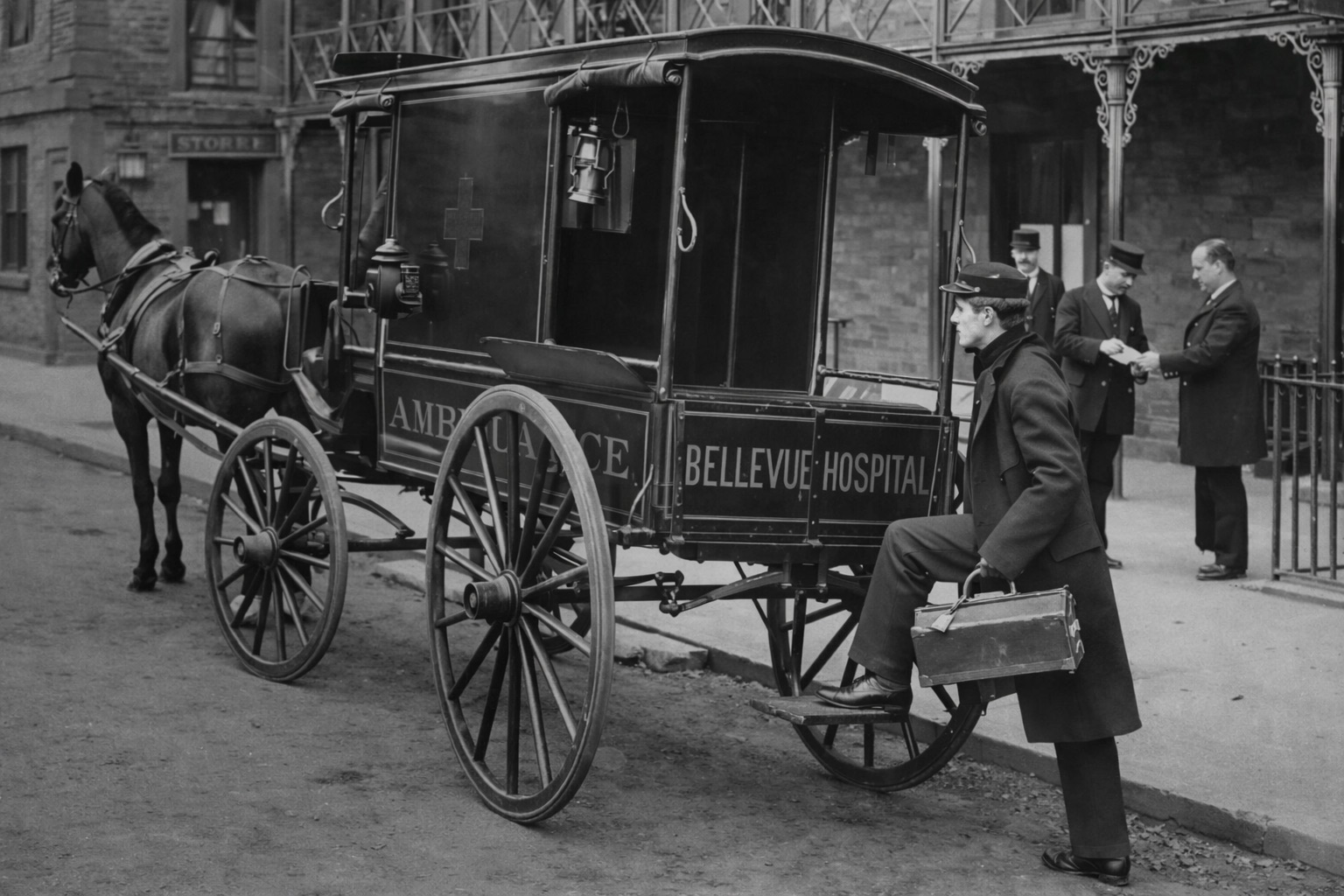
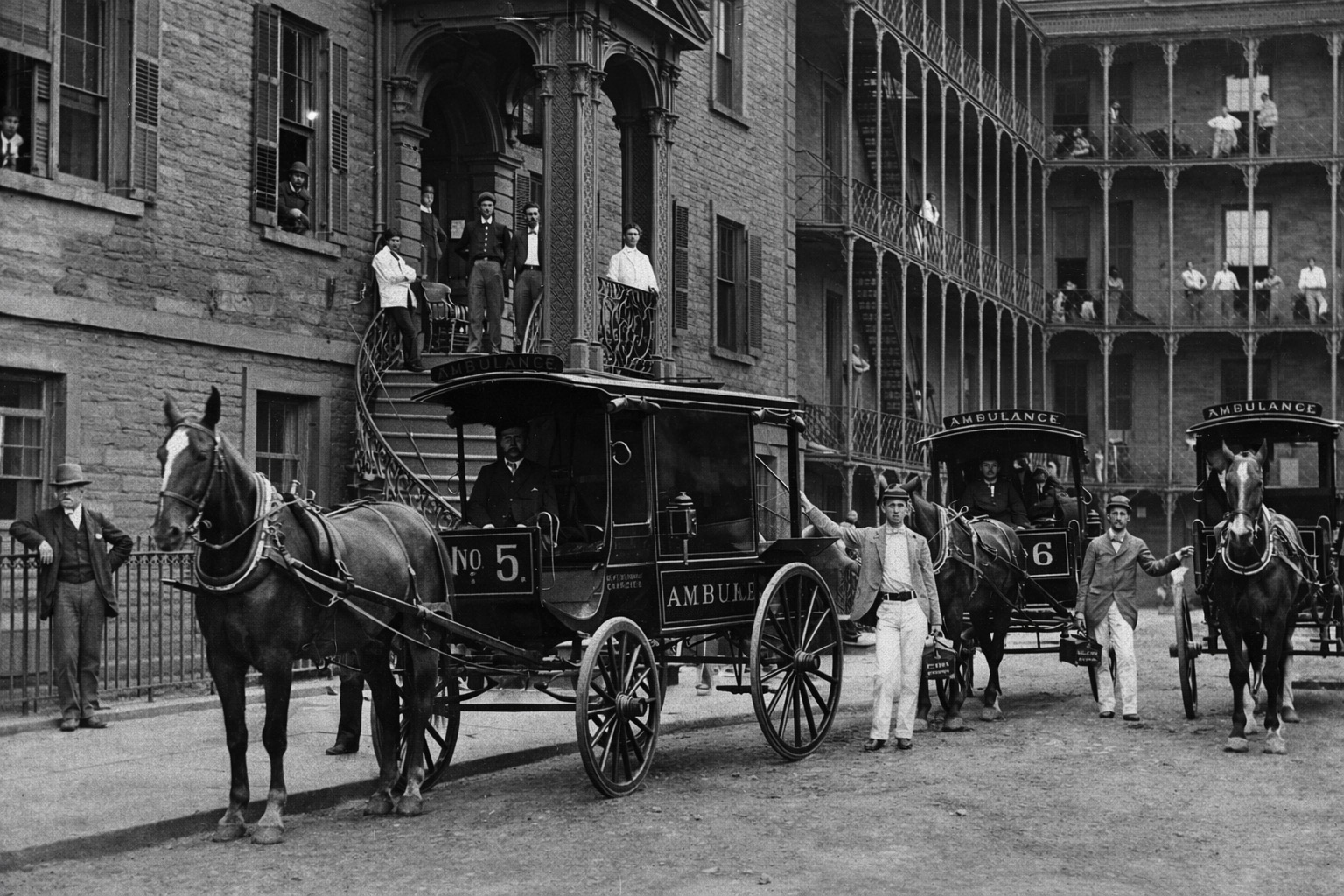
Bellevue Hospital, under the leadership of Civil War surgeon Dr. Edward Dalton, launched the first municipally operated ambulance service in New York City in 1869. Dalton, who had served as Medical Inspector of the U.S. Sanitary Commission, brought battlefield innovations to the city streets—equipping ambulances with surgical kits, stretchers, and medical attendants. This service institutionalized ambulance response within city governance, making EMS a public responsibility for the first time in the city’s history.

At the time, New York City referred only to Manhattan and parts of the Bronx. Brooklyn, Queens, and Staten Island were still independent municipalities and would not join the consolidated city until 1898.

1886 Bellevue Ambulance in New York City
Read more

Each Bellevue ambulance was staffed by a trained intern and driver and deployed via telegraph from police precincts. This integrated system linked law enforcement, hospitals, and public health in an unprecedented model of coordinated emergency care. Dalton’s framework became a national template for city-run ambulance services throughout the late 19th and early 20th centuries.

Learn more about the history of New York City EMS at the Coney Island EMS Timeline

Read more from the Civil War Medicine Museum

1870–1871 2 events

U.S. Army Sends Ambulances to Paris During Franco-German War

During the Franco-German War, the United States Army provided ambulance wagons to Paris to aid in medical evacuation and civilian relief efforts. These ambulances, modeled after Civil War-era designs, were part of a broader humanitarian outreach and diplomatic goodwill mission.
Read more

This act marked one of the earliest instances of international medical aid by the U.S. military and demonstrated the global influence of the American ambulance system pioneered during the Civil War.

Jonathan Letterman's refinements in battlefield triage and ambulance logistics—developed just a decade earlier—were now making a global impact, influencing how other nations approached wartime medical care.

Note: The effort was widely reported in both American and European press as an act of solidarity and innovation in military medicine.

Read the original documentation of the U.S. Army ambulance support to Paris

The American Ambulance in Paris — Civil War Reforms Exported to Europe

During the Franco-Prussian War, American physician Thomas W. Evans—a former inspector of the U.S. Sanitary Commission—organized the American Ambulance in Paris, a physician-commanded mobile hospital system built explicitly on Civil War principles. Evans cited Letterman's Medical Recollections of the Army of the Potomac as an authority on system-level ambulance organization and modeled his institution on Sanitary Commission reform culture through the American International Sanitary Committee. The ambulance operated with a surgeon-in-chief, surgical assistants, a nursing corps, and a subordinate transport corps—placing clinical authority over logistics, directly mirroring the Civil War ambulance corps structure that Letterman had pioneered.
Read more

French military authorities formally recognized the ambulance's value; Intendant-General Wolf wrote that "the American Ambulance has rendered to the army substantial services." The Queen's Hospital in Birmingham was subsequently constructed "according to the American system," documenting European adoption of American hospital design principles rooted in Civil War innovations. After hostilities ended, the ambulance closed and its staff dispersed—a pattern of institutional impermanence that would recur throughout ambulance history.

Evans's 1873 account, History of the American Ambulance Established in Paris during the Siege of 1870–71, documents the first major transatlantic export of Civil War medical reforms—reforms that would be carried further by Benjamin Howard's ambulance campaign in London a decade later. Together, the Evans and Howard episodes reveal that American prehospital care innovations were internationally recognized well before the 20th century, even as sustained adoption proved elusive on both sides of the Atlantic.

Source: Evans, Thomas W. History of the American Ambulance Established in Paris during the Siege of 1870–71. London: Bradbury, Agnew, & Co., 1873.

Read the full text (PDF)

1871 1 event

NYC Traveler’s Guide Highlights Modern Ambulance Service

In 1871, a widely circulated travel guide to New York City prominently featured the city’s ambulance system, describing its rapid response, medical equipment, and trained personnel. The guide’s praise reflected growing public awareness and civic pride in municipal emergency services. By advertising ambulance availability to both residents and visitors, the guide helped normalize the idea of prompt, professional emergency care as an expected feature of urban life.
Read more

This public-facing documentation reinforced EMS as a visible and valued component of municipal infrastructure—contributing to cultural acceptance of ambulance services as essential to public health and safety.

View original source (EMS History Archives)

1872 1 event

First Ambulance–Pedestrian Court Case

In what may be the first legal case involving an ambulance striking a pedestrian, the Supreme Court of the City and County of New York ruled on a 5 mph collision involving a horse-drawn ambulance. The case illustrates the early legal and public tensions around the use of emergency vehicles in urban spaces—a tension that continues today in modern EMS liability and operations.

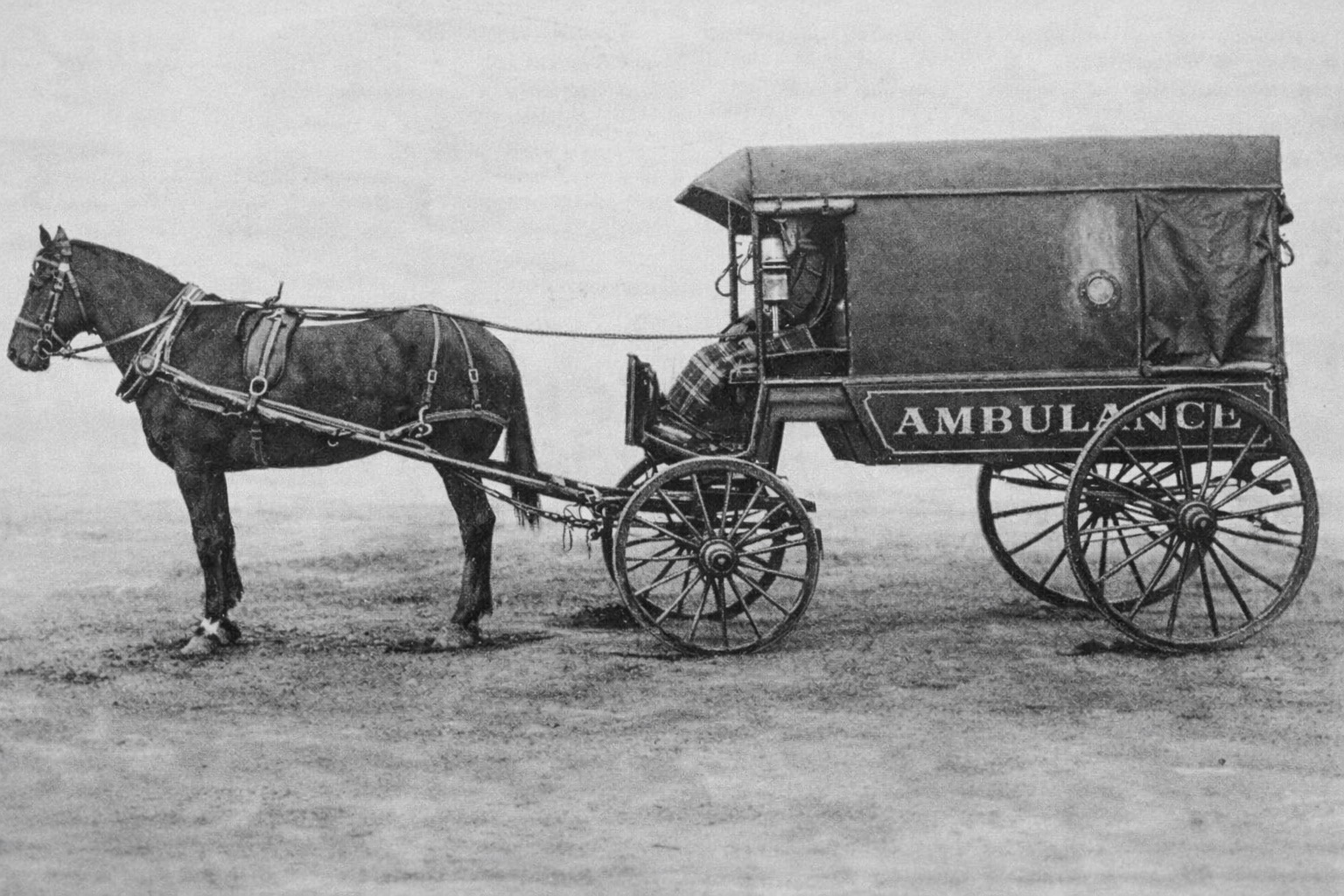
1870s Bellevue Hospital Ambulance Image: Bellevue Hospital Horse-Drawn Ambulance (circa 1870s)
Source: Supreme Court, City and County of New York (1872)
1873 1 event

First Municipal Ambulance in Brooklyn, NY

The City of Brooklyn—then a separate city from New York—launched its first municipal ambulance in August 1873 at Long Island College Hospital. Staffed by hospital surgeons and funded by the city’s Department of Health, the ambulance represented a significant expansion of city-supported emergency care. A second ambulance was added just two months later at Eastern District Hospital. These milestones predate the 1884 expansion to defined ambulance districts across Brooklyn.
1875 1 event

Invention of the Thomas Splint

British orthopedic surgeon Hugh Owen Thomas designed the first practical traction splint in 1875. Known later as the "Thomas leg splint" or "Thomas half ring," it became a breakthrough in fracture management. Passed down through a family of Welsh bone setters, the design gained widespread military adoption during World War I. By 1918, its use had reduced mortality in femur fractures from 80% to about 7% among British and French forces.
Source: History of the Thomas Splint – Orthopedics Rhode Island
1880 1 event

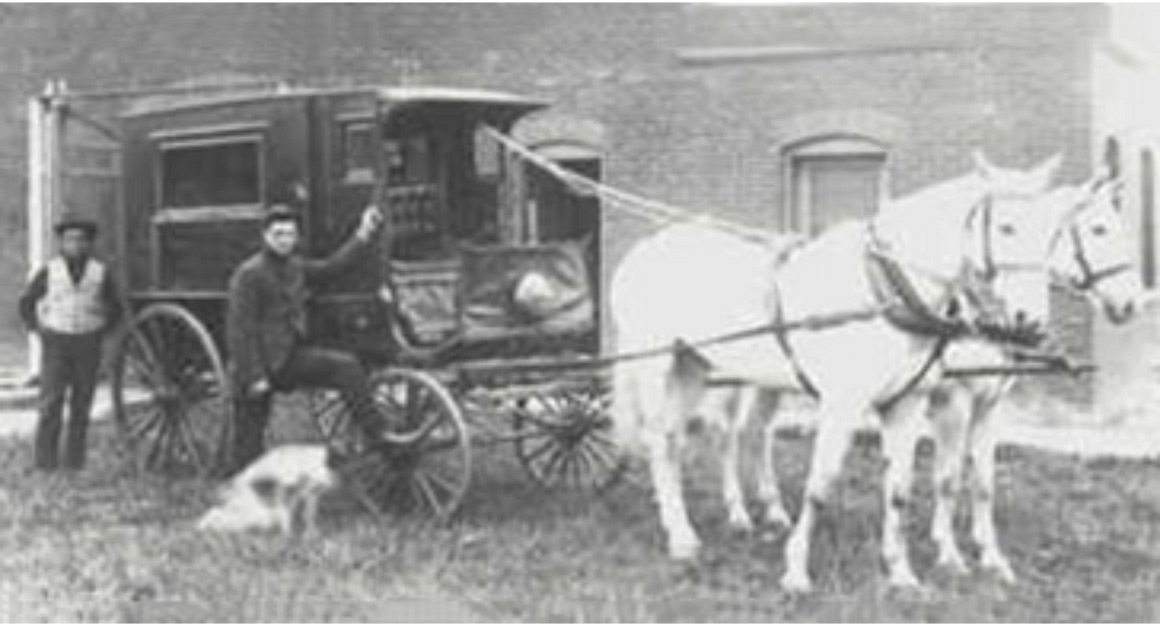
Cleveland Medical Journal Documents Undertaker-Run Ambulance Service

In 1908, *The Cleveland Medical Journal* published an article referencing the funeral‑home ambulance practices first observed in the 1880s. The article confirmed how local undertakers routinely provided patient transport using horse‑drawn wagons staffed by informal attendants.
Read more

The Journal specifically noted that attendants were often casual bystanders, not employed staff—reiterating: “The attendant on the rear of the wagon is not usually an employee but one who is simply loafing around the barn and finds delight in making the runs.”

This 1908 documentation provides one of the earliest professional recognitions of funeral-home–based ambulance systems, underscoring both the widespread reliance on undertakers for emergency transport and the need for regulated EMS improvements.

Read the 1908 Article (PDF)

1881 3 events
National Event

President Garfield Transported by Ambulance

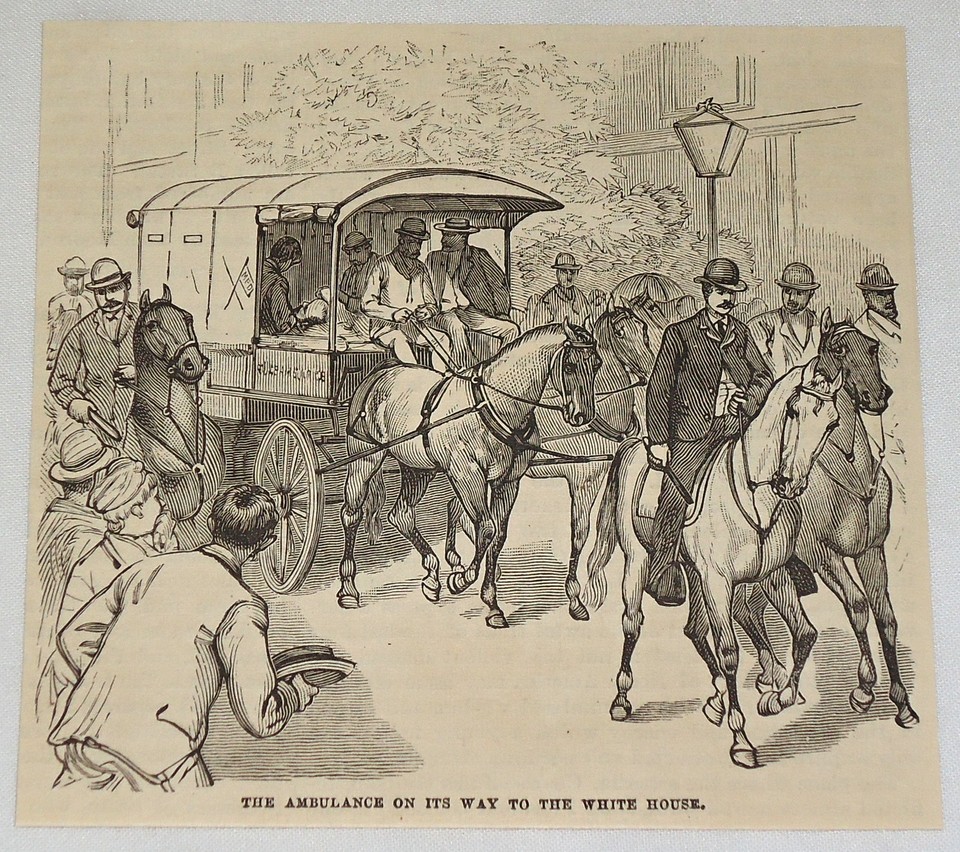
After being shot on July 2, 1881, President James A. Garfield became the first U.S. president known to be transported by ambulance. Following his initial treatment at the railway station, “it was decided to remove him to the White House.” Drs. Smith and Townshend accompanied the president in the ambulance, where he was taken for further examination and care.

This early use of ambulance transport for a head of state helped reinforce the growing legitimacy and necessity of organized emergency medical response in the United States.

Ambulance wagon used for President Garfield Image: Period depiction of President Garfield's ambulance transport
Source: The Life and Assassination of President James A. Garfield (1881)
Read more

British Medical Journal Documents Ambulance Progress

The British Medical Journal published coverage of ambulance developments, documenting the growing international exchange of ideas between American and British emergency transport systems. British medical professionals took increasing note of American ambulance innovations as they considered reforms to their own systems.

Read more

American Ambulance Innovation Exported to London — and the Limits of Knowledge Transfer

By the early 1880s, the institutional tradition of organized ambulance care born on Civil War battlefields had produced sophisticated hospital-based ambulance systems across major American cities. New York, Boston, Chicago, Philadelphia, Cincinnati, and Washington all operated physician-staffed ambulances with telephonic dispatch, hospital-based deployment, standardized documentation, and response times rivaling fire engines. In July 1881, Dr. Benjamin Howard—an American military surgeon trained in the Letterman tradition whose ambulance design won international prizes—published a detailed account of New York's system in the British Medical Journal, presenting it as the model London should adopt. That same month, a London surgeon described the only conveyance he could find for his critically ill son as resembling "a cross between a hearse and dirty linen cart."
Read more

In January 1882, Howard presented a comprehensive proposal to the Medical Society of London, surveying American ambulance systems in six cities, demonstrating a purpose-built ambulance he had designed for the London Hospital, and outlining a district-based coverage system using telegraph and telephone communication. By 1884, "Howard's pattern" ambulance wagons had been deployed to London police stations, Liverpool's Northern Hospital, and ambulance associations across Scotland—though London's hospitals still refused to participate in a coordinated system.

Yet over two decades later, in 1904, London physicians were still writing to the BMJ pleading for basic ambulance availability. The American model had been exported, demonstrated, and partially adopted—but without sustained institutional commitment, even direct knowledge transfer from the world's leading system could not take root. The pattern foreshadowed what would later happen in America itself: sophisticated prehospital care systems proved fragile everywhere when the institutions meant to sustain them failed to do so.

Key Sources (British Medical Journal archives):

BMJ Source Document 1 — Howard's account of American ambulance systems (PDF)

BMJ Source Document 2 — London surgeon's letter on transport conditions (PDF)

BMJ Source Document 3 — Howard's proposal to the Medical Society of London (PDF)

BMJ Source Document 4 — Deployment of Howard's ambulance design (PDF)

BMJ Source Document 5 — 1904 London physicians still pleading for ambulances (PDF)

1882 1 event

American EMS Pioneer Launches London's First Hospital Ambulance Service

On January 30, 1882, Dr. Benjamin Howard — a U.S. Army surgeon who served at the Battle of Antietam under the Letterman ambulance system — addressed the Medical Society of London, presenting the case for a hospital-based ambulance service modeled directly on American systems. Howard had persuaded the London Hospital to adopt the first such service in Europe, and personally designed the ambulance carriage used, adapting it from his Civil War military ambulance. This landmark moment represents one of the earliest documented cases of American EMS innovation being exported internationally.
Read more

Howard's address, published in The Lancet, systematically described the ambulance systems already operating in Chicago, New York, Boston, Philadelphia, Cincinnati, and Washington, D.C. — presenting them as the proven standard London should follow. He noted that American cities used telephonic dispatch, dedicated horse-drawn ambulances kept harnessed day and night, and hospital-based medical attendants responding directly to emergencies — a model he called "strictly a hospital-ambulance system."

Howard designed and built the London Hospital's ambulance carriage locally after initially planning to import one from New York. The vehicle incorporated the counterpoise spring system from his military ambulance, which had won the highest international prize at the Paris Exposition and was used in both the American Civil War and Franco-German War. He described the ambulance as "the only accident ambulance carriage in civil life in Europe."

In his address, Howard contrasted London's lack of any organized system — where emergency transport relied on police stretchers, wheelbarrow litters, and horse-drawn cabs — with the American model where ambulance response times "rival the fire engines." He argued that London's emergency care provisions were "what they were a century ago."

Historical significance: This primary source document is direct evidence that the modern London ambulance service was consciously modeled on American Civil War medical systems and U.S. urban ambulance services. It demonstrates the international diffusion of EMS innovation originating from the Letterman system through American cities and then to Europe.

Read the original 1882 Lancet article (PDF)

1883 1 event

Proposal Submitted to Establish Ambulance Service in Philadelphia

In 1883, a formal proposal was submitted to the City of Philadelphia recommending the creation of a structured municipal ambulance service. Inspired by emerging ambulance models in cities like New York, Boston, and Cincinnati, this document laid the foundation for a coordinated emergency response framework in one of the nation’s largest cities.
Read more

The proposal emphasized the urgent need for rapid transport of injured citizens to hospitals and advocated for dedicated ambulance wagons, trained attendants, and improved response coordination. It reflected growing national momentum to shift from informal or police-led transport toward medically informed emergency services.

This 1883 initiative preceded the full establishment of Philadelphia’s formal ambulance system and demonstrates the influence of public health reformers, physicians, and city officials in advancing prehospital care.

Read the Full 1883 Proposal Document (PDF)

1884 3 events

Brooklyn Expands to a Citywide Ambulance System

In 1884, the independent City of Brooklyn formalized and expanded its municipal ambulance program by introducing structured ambulance districts. Building upon ambulance operations that began in 1873 at Long Island College Hospital and Eastern District Hospital, this expansion marked a significant step toward coordinated, citywide EMS delivery. The model emphasized geographic coverage, improved dispatching, and greater public access to emergency medical transport.

Note: Brooklyn was an independent city until 1898, when it joined Manhattan, Queens, the Bronx, and Staten Island to form the modern City of New York.

Historic Ambulance Service - Brooklyn 1884
Early ambulance infrastructure in Brooklyn evolved rapidly between 1873 and 1884, transitioning from hospital-based units to a formal municipal system.
Image credit: Proto Magazine / MGH
Read more

The Mayor’s 1884 report outlined the growing public demand for ambulance access, prompting the development of defined ambulance districts and dedicated coverage areas. This marked a transition from reactive transport to a more proactive, planned emergency response framework. Calls soon followed for professionalization of staffing and further expansion.

Read the 1884 Mayor’s Report (PDF)

Collective History of EMS in New York City, 1885–1920 (PDF)

First Proposal for a National Ambulance System

In 1884, U.S. Army Surgeon Charles H. Alden formally proposed a national ambulance system during testimony before Congress. Alden’s remarks reflected lessons learned during the Civil War and emphasized the military’s need for a permanent, mobile medical response infrastructure in times of war and national emergency. His vision foreshadowed the eventual establishment of formalized prehospital systems in both military and civilian settings.
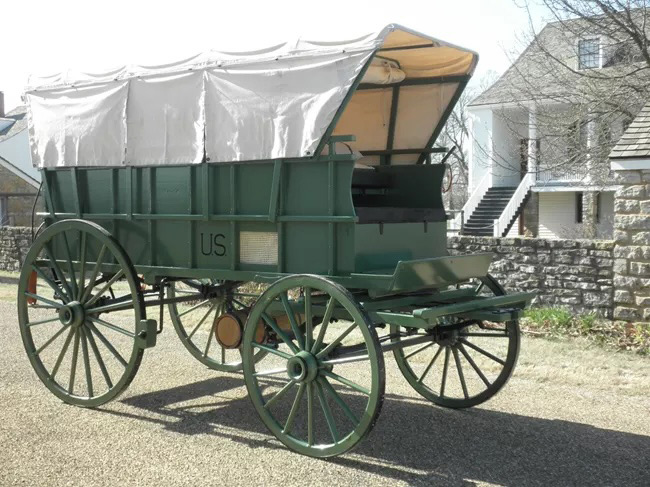
1880s Army Ambulance
U.S. Army ambulance wagon, late 1800s.
Image credit: National Park Service
Read more

Alden’s testimony represents one of the earliest federal-level appeals for structured ambulance services—an idea that would gradually evolve into modern EMS nearly a century later.

Read original testimony excerpt (PDF)

London Examines American Ambulance Model

British medical journals documented London's examination of American ambulance systems as a model for establishing organized emergency transport in the capital. The reports highlighted how New York's municipal ambulance service, now over a decade old, was influencing international thinking about emergency medical transport.

Read more
1885 1 event

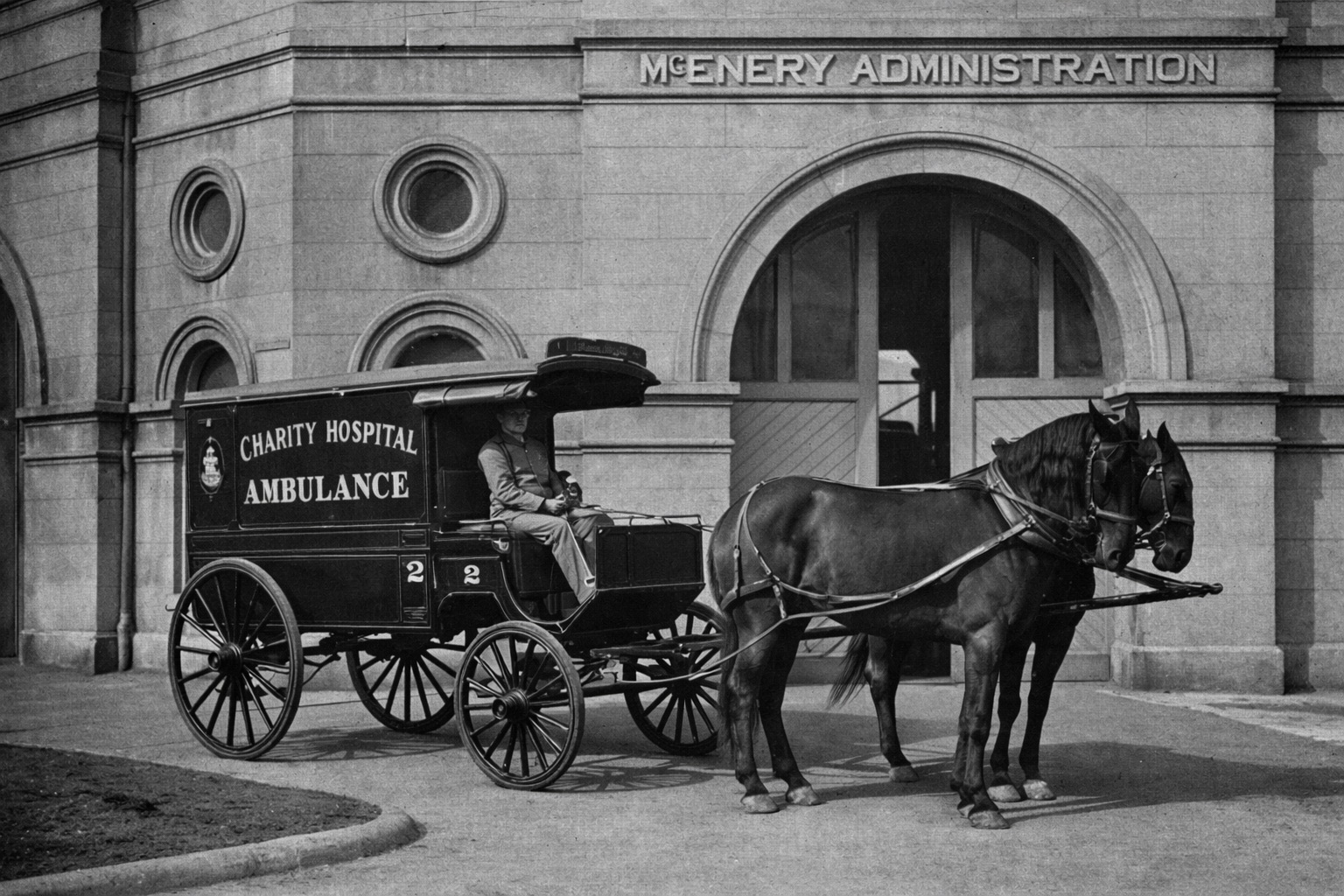
Charity Hospital Launches Ambulance Service in New Orleans

On February 2, 1885, Charity Hospital in New Orleans formally launched its ambulance service, marking a major development in organized emergency care in the Southern United States. The service reflected growing institutional recognition of the need for timely medical transport and contributed to public expectations of hospital-led EMS. As one of the earliest continuous ambulance operations in the region, it helped shape a consistent standard of civilian emergency care.
Charity Hospital Ambulance, New Orleans 1885
Read more

Charity Hospital’s investment in ambulance infrastructure—amidst the broader post-Reconstruction growth of public health systems—demonstrated how Southern institutions adapted national EMS innovations to meet regional needs.

View original source (EMS History Archives)

1887 1 event

First Ambulance at Indianapolis City Hospital

In 1887 and 1888, the first ambulance operated by Indianapolis City Hospital began transporting sick and injured patients. This early municipal ambulance service laid the foundation for what is now Indianapolis EMS, which today operates a modern fleet of 44 ambulances and 39 support vehicles. The program represents one of the earliest examples of organized prehospital care in Indiana.
Indianapolis EMS Historical Ambulance
1893 Indianapolis City Council Budget
Indianapolis EMS History Page
1889 1 event

Dent v. West Virginia – States May Regulate Medicine

In Dent v. West Virginia, the U.S. Supreme Court upheld the right of states to regulate the medical profession. The case involved Dr. Frank Dent, who was prosecuted for practicing without a state-issued license. The Court ruled that requiring physicians to meet educational and competency standards did not violate constitutional rights.

Illustration related to medical licensing and the Dent decision
Read more

Significance: This decision laid the foundation for state-based medical licensing and affirmed the legitimacy of setting minimum education and training requirements to protect public health.

Read the Full Supreme Court Opinion

1894 1 event

St. Louis Electric Ambulance Car

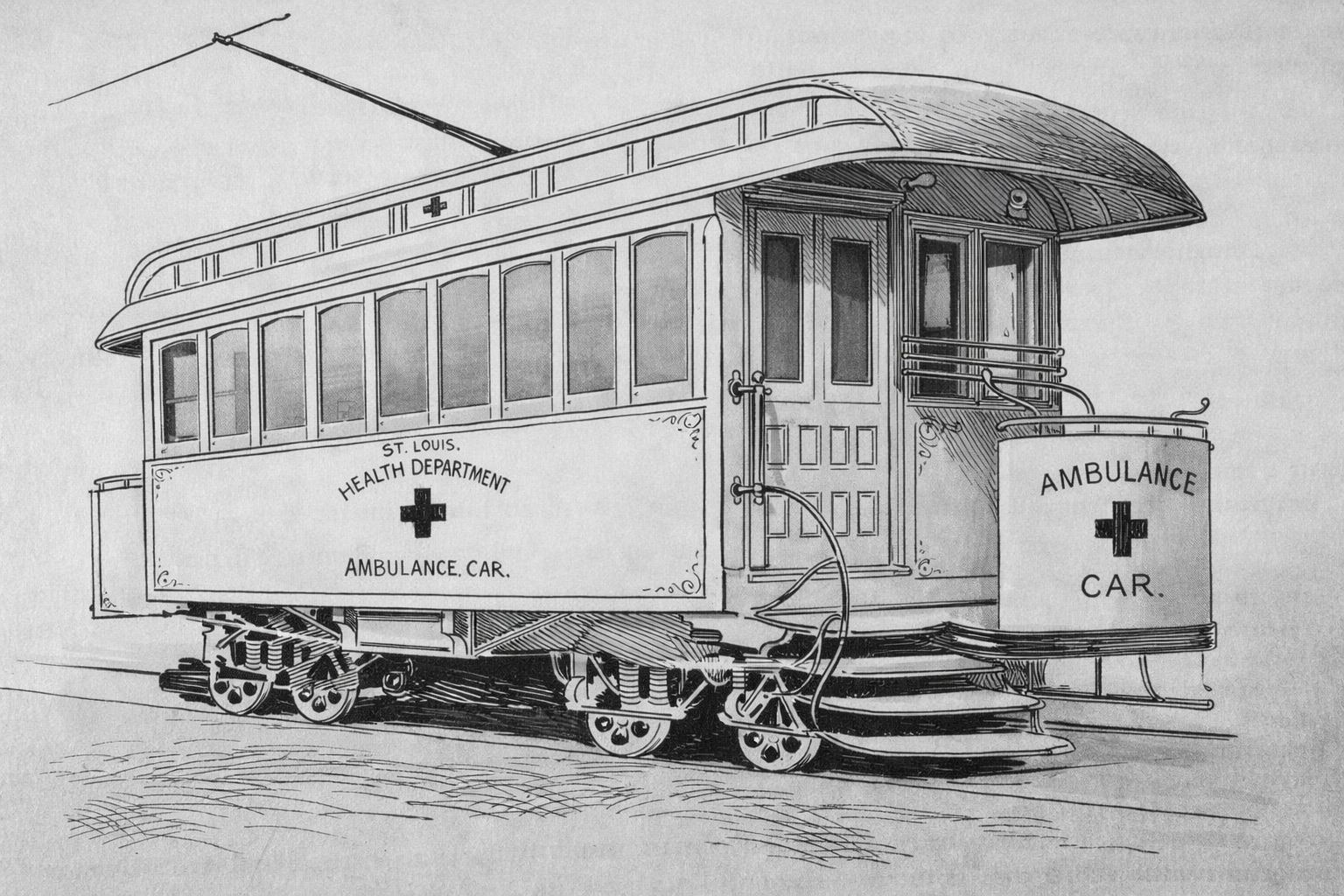
The St. Louis Electric Ambulance Car, introduced in 1893 and entering service on December 27, 1894, was the world’s first electric-powered ambulance. Designed as a cable car by the St. Louis Health Department, it was specifically built for transporting patients. Though short-lived, it marked an early experiment in electrically powered EMS transport—decades ahead of its time.
St. Louis Electric Ambulance
Image Credit: Alamy / Tri-State Medical Journal, 1895
1895 2 events

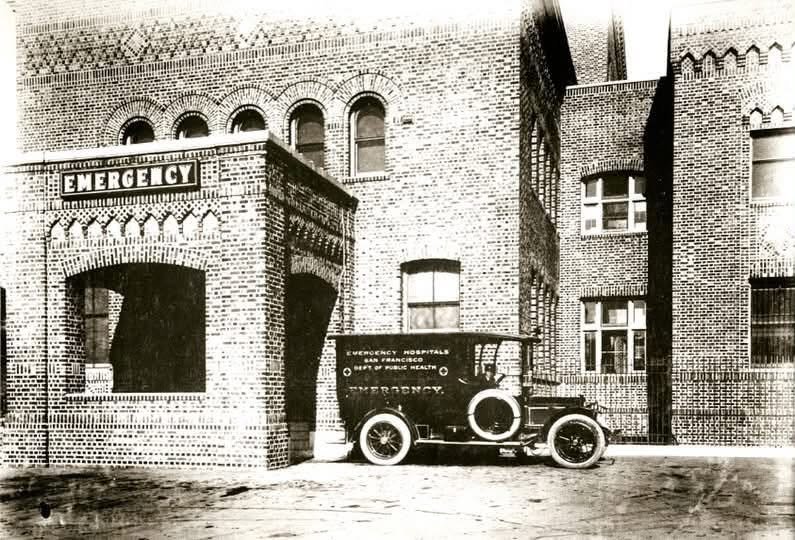
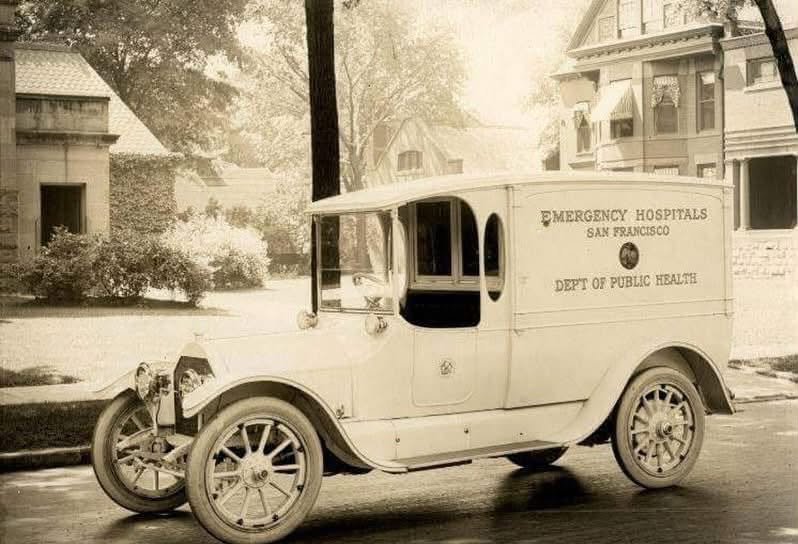
San Francisco Launches Municipal Ambulance Service

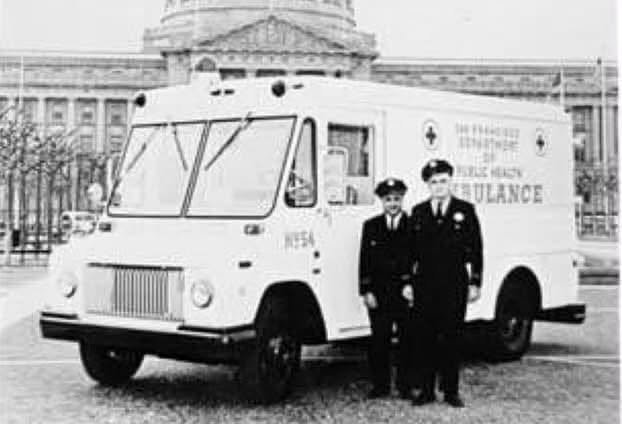
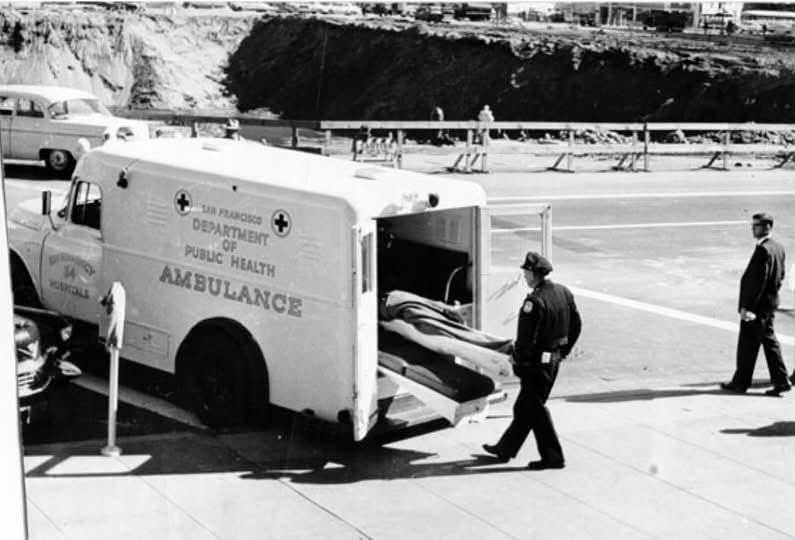
San Francisco established the first continuously operating municipal ambulance service in the United States in 1895. Initially managed by the Department of Public Health, the service marked a pivotal shift from ad hoc emergency care toward formalized, city-run response systems. Its uninterrupted operation for over 130 years has set a national precedent for municipal EMS. In 1997, the service was integrated into the San Francisco Fire Department, where it continues to serve residents and visitors alike. This milestone helped shape future models for city-based EMS systems across the country.
Read more

In 2025, Mayor Daniel Lurie issued a formal proclamation commemorating 130 years of continuous service, highlighting the department's enduring commitment to public health and emergency response. The San Francisco Fire Department continues to uphold this legacy today.

Read more on the San Francisco Fire Department website

Chicago Envious of New York's Ambulance System

In an 1895 report, the Chicago Police Chief expressed urgent concern about the city’s inadequate ambulance service, noting that Chicago—despite its advanced patrol wagon system—was falling far behind New York in caring for the sick and injured. At the time, Chicago operated just two ambulances, while New York had over twenty, including eight at Bellevue Hospital alone. The chief warned that the city’s reputation and humanitarian duty required an immediate investment in additional ambulances.

“It is true that while we lead all other large cities in our almost perfect patrol wagon system, we are very much behind them in providing for the sick and wounded that constantly demand our service... I trust that in the interests of suffering humanity and for the good name of Chicago you will provide the necessary means to furnish at least four more ambulances.”
Source: History of Chicago, Illinois (1895)
1897 1 event

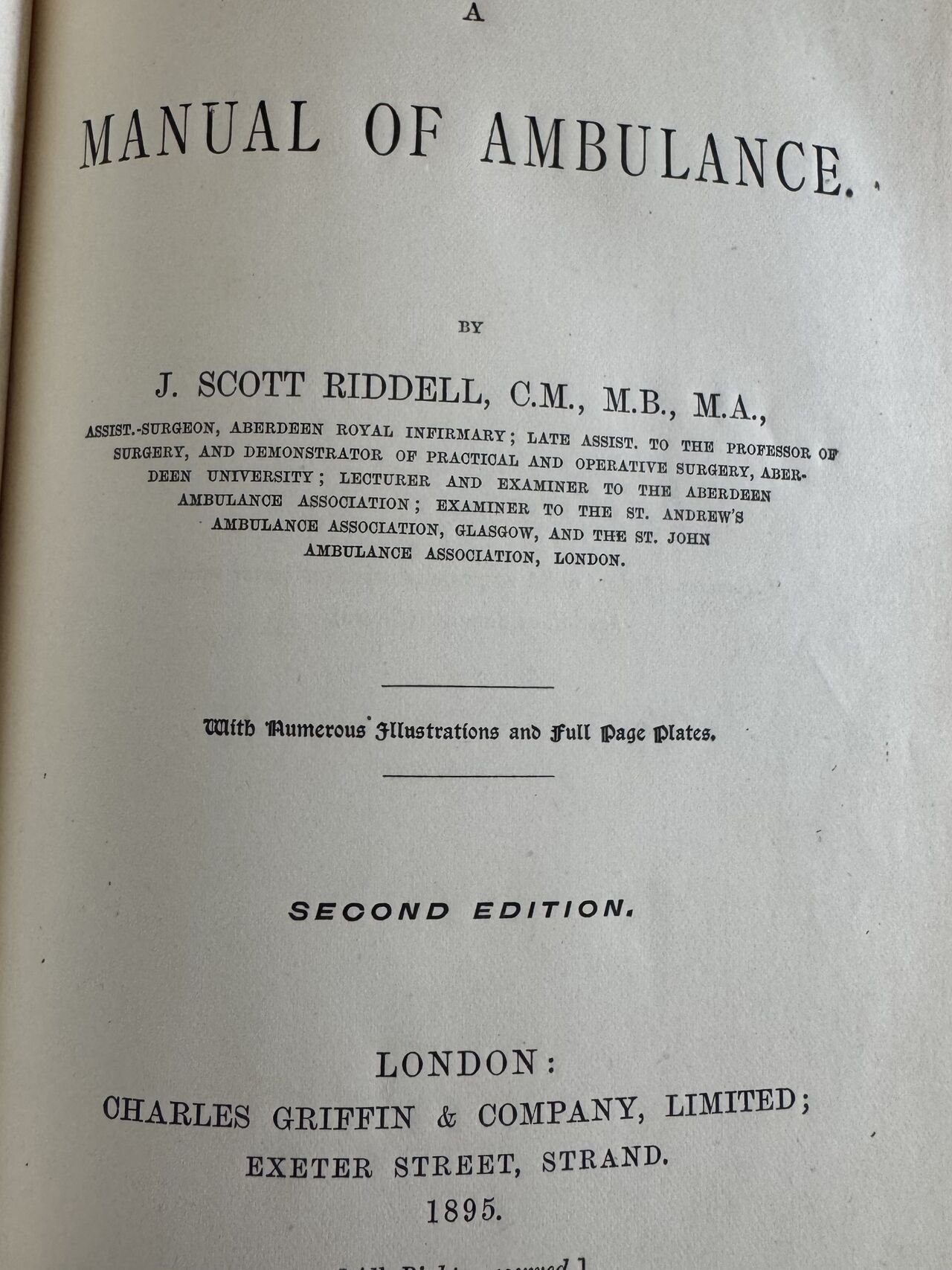
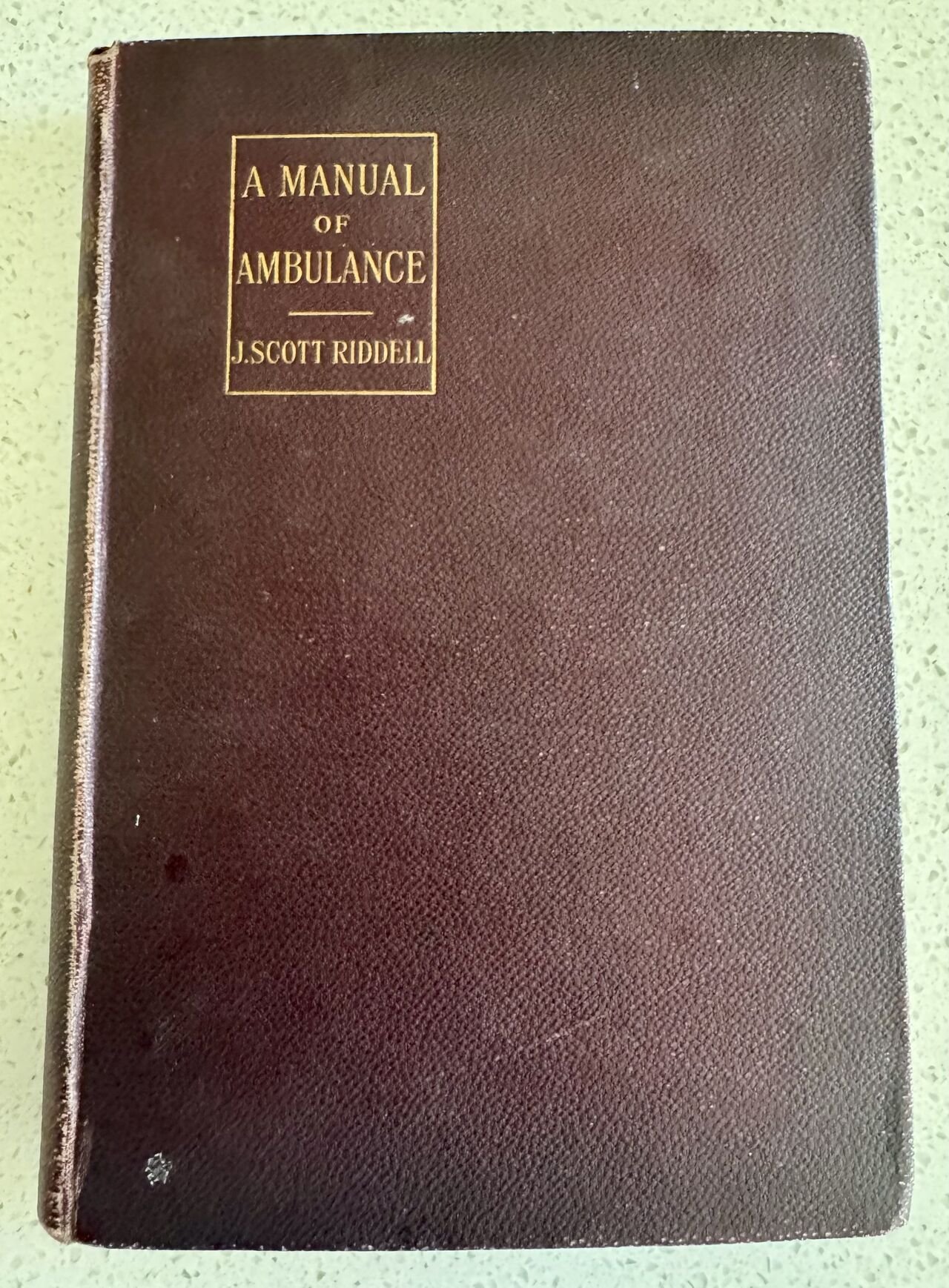
Third Edition of A Manual of Ambulance Published

Scottish surgeon John Scott Riddell (1864–1929) published the third edition of A Manual of Ambulance through Charles Griffin & Company in London. The comprehensive medical textbook—featuring 170 detailed illustrations and full-page anatomical plates—was written specifically for ambulance personnel, covering topics from fracture management and bandaging to patient transport and emergency assessment. The fact that a rigorous, medical-school-level textbook had already reached its third edition by 1897 demonstrates the remarkable depth of commitment to out-of-hospital care education in the late 19th century, decades before modern EMS systems were formally established.
Read more

Riddell was a surgeon based in Aberdeen, Scotland, and his manual was one of the most widely used ambulance training texts of its era. The book went through multiple editions—the Wellcome Collection catalogs a 1913 edition at 254 pages with 36 plates—reflecting sustained demand for formal prehospital education. Unlike the basic first-aid pamphlets common at the time, Riddell's work treated ambulance care as a discipline worthy of structured, illustrated medical instruction, establishing a standard that would not become common in the United States until the latter half of the 20th century.

Read the full text of A Manual of Ambulance (PDF)

Wellcome Collection catalog entry

British Medical Journal obituary for J. Scott Riddell (1930)

A Manual of Ambulance, 1897 (PDF)

1898 1 event

Hawker v. New York – Morality and Licensure

In Hawker v. New York, the U.S. Supreme Court upheld a state law barring individuals with felony convictions from practicing medicine—even if the conviction predated the law. The Court reasoned that licensure is not a punishment but a safeguard to ensure trustworthy professionals.

Illustration from the Hawker appeal case
Read more

Significance: Building on Dent v. West Virginia, this decision established that states can regulate licensure not only based on competence but also on character and moral conduct, including past criminal convictions.

Read the Full Supreme Court Opinion

1899 1 event

First Motorized Ambulance Deployed in Chicago

In 1899, Michael Reese Hospital in Chicago launched the nation’s first motorized ambulance, funded by a group of 500 prominent local businessmen. This innovation marked a turning point in prehospital care, dramatically improving response times and reliability over horse-drawn vehicles. The electric-powered vehicle could reach speeds up to 16 mph and carried a stretcher, medical supplies, and space for a physician—foreshadowing the design and functionality of modern ambulances. Photo from 1902 of an Electric Ambulance
Read more

This early adaptation of electric automotive technology signaled a broader shift toward mechanized emergency response, influencing ambulance fleet modernization across the U.S. and abroad.

View source

1903 3 events

Dr. Emily Dunning Barringer Becomes First Female Ambulance Surgeon

In 1903, Dr. Emily Dunning Barringer was appointed as the first female ambulance surgeon at New York City’s Gouverneur Hospital. Facing intense discrimination and skepticism from male colleagues, she persisted in performing emergency responses across the city—often riding on horse-drawn ambulances to scenes of trauma. Her determination and professionalism helped dismantle gender barriers in prehospital care and paved the way for future generations of women in EMS and surgery.
Read more

Dr. Barringer later became a national advocate for women in medicine and played a key role in recruiting female physicians for the U.S. military during World War I.

View source

Ambulance Work Questions and Answers, 1903 (PDF)

Motor Cycling and Motoring on Motor Ambulances, 1903 (PDF)

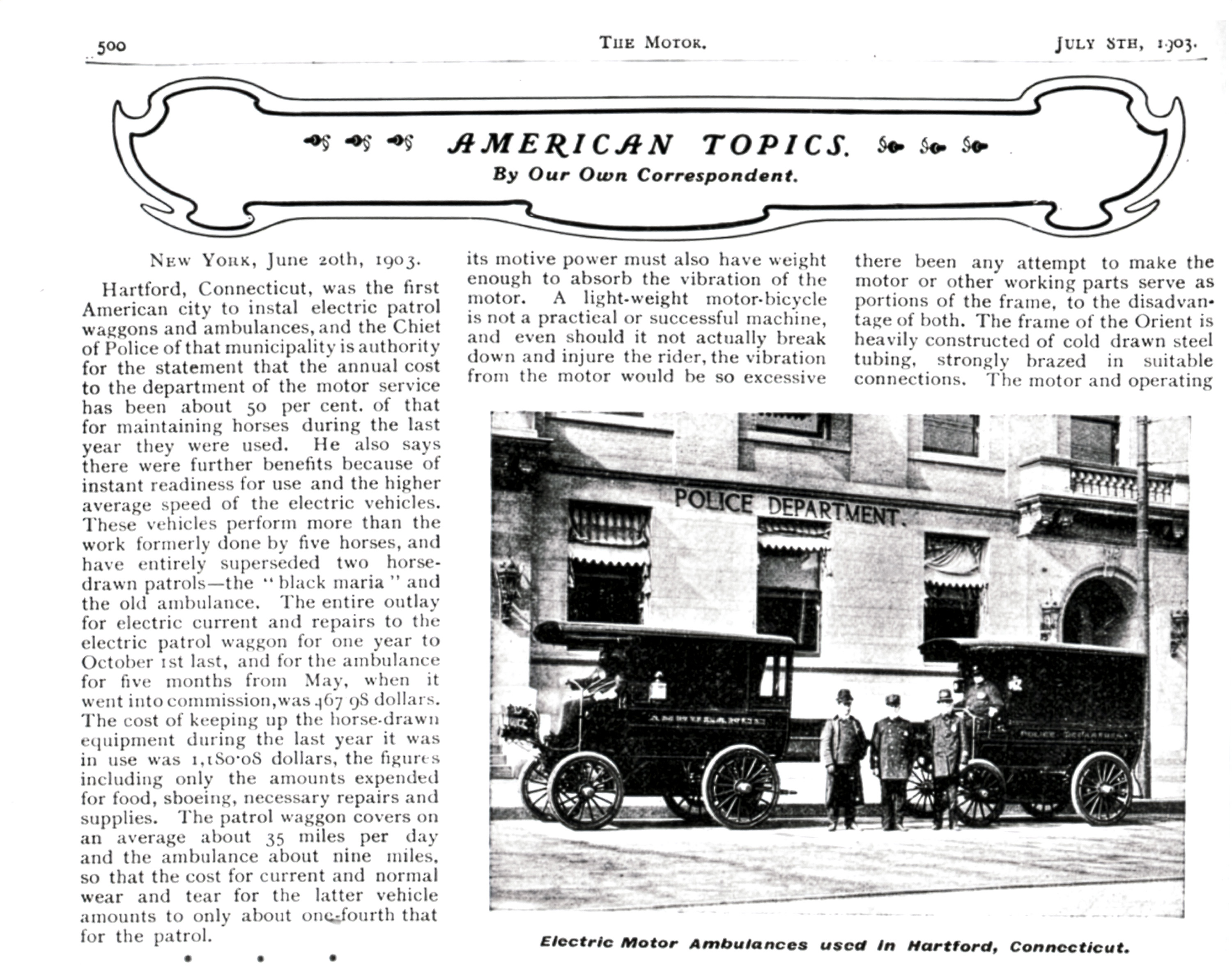
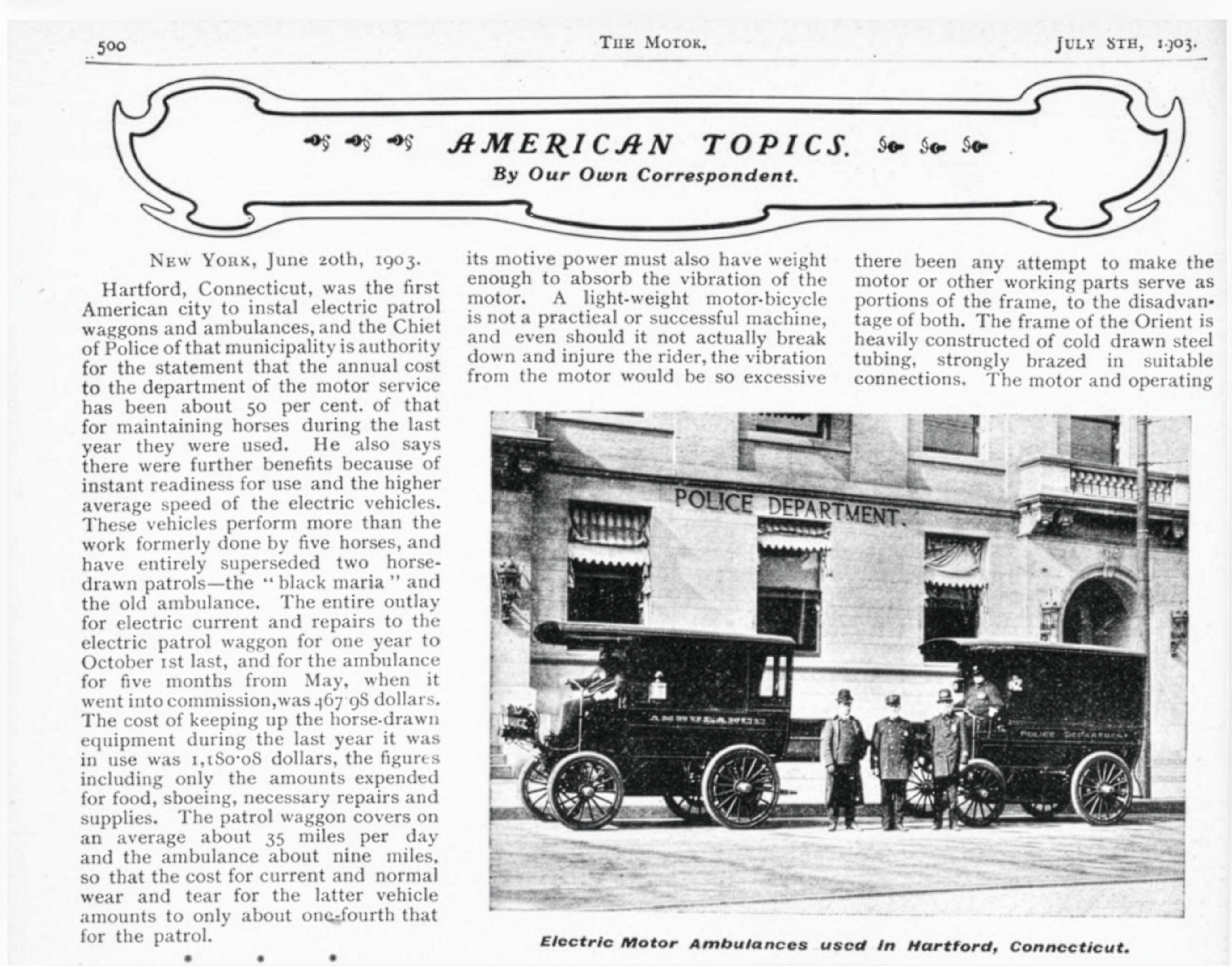
Hartford Deploys Electric Motor Ambulances

Hartford, Connecticut became one of the first U.S. municipalities to fully transition from horse-drawn emergency wagons to electrically powered motor ambulances. As reported in the July 8, 1903 issue of The Motor, the city replaced both police patrol wagons and traditional horse-drawn conveyances with electric vehicles that were constantly ready for deployment. The Chief of Police reported annual operating costs had fallen to roughly half of what horses and wagons required. The new vehicles proved so superior that they completely replaced the old fleet: "They perform more than the old horse-drawn wagons and have entirely superseded the two horses and old ambulance."
Electric Motor Ambulances used in Hartford, Connecticut, 1903 Hartford electric motor ambulance as featured in The Motor, July 8, 1903
Read more

Hartford's adoption was not experimental but fully operational. The city had already collected performance data demonstrating that expenses related to feed, stabling, veterinary care, and horse replacement far exceeded the costs of electric current and mechanical repairs. The electric ambulances required only one hour of rest after a ten-mile run compared to the extensive downtime horses needed, and engineers addressed early concerns about vibration and structural stress through reinforced frames and flexible motor connections.

The episode is historically significant because it documents municipal governments making data-driven investments in emergency transport modernization—fleet readiness, lifecycle cost analysis, performance metrics, and infrastructure-based emergency response—concepts still central to EMS operations today. Hartford in 1903 was already operating with the same systems-thinking approach that would not become standard across American EMS for another seven decades, reinforcing the pattern of early innovation followed by institutional regression that characterizes much of prehospital care history.

Source: The Motor, July 8, 1903.

Read the full July 8, 1903 issue of The Motor (PDF)

1903 3 events
National Event

Wright Brothers' First Powered Flight

On December 17, 1903, Orville and Wilbur Wright achieved the world’s first sustained, controlled powered flight in Kitty Hawk, North Carolina. While not originally intended for emergency use, this milestone in aviation laid the groundwork for future air medical transport. By mid-20th century, aircraft would become a vital tool in military medevac and civilian EMS, particularly in rural and trauma care settings.
1904 1 event

British Physicians Plead for Ambulance Service in London

More than two decades after American cities established organized ambulance systems, London physicians wrote to the British Medical Journal pleading for basic ambulance services in the capital. The contrast between American municipal ambulance systems — operating since the 1860s — and London's lack of organized emergency transport underscored the lasting international impact of American EMS innovation.

Read more
1905 1 event

Scottish Physician Documents American Ambulance Superiority

Scottish physician Campbell Douglas published a detailed account of American hospital practices in the Glasgow Medical Journal following a six-week tour of U.S. hospitals. His description of the Bellevue Hospital ambulance system confirmed that physician-staffed ambulances remained the operational standard in American cities decades after their founding. Douglas documented ambulances standing horsed and ready, house-surgeons dispatched with medical bags on every call, and advanced field interventions—including en route treatment of a heatstroke patient with ice and an ambulance surgeon carrying a boy with a ruptured mesenteric artery directly into the operating theater. His observation that the American system "differs considerably from our own" confirmed that British practice still lagged behind more than twenty years after Benjamin Howard had attempted to export it to London.
Read more

Douglas's account is significant because it provides independent corroboration—from a trained foreign observer—that the American ambulance model was not merely a historical curiosity but a living, functioning system still delivering physician-level prehospital care at the turn of the 20th century. His descriptions of en route clinical interventions document a level of prehospital medicine that would not become standard again in the United States until the paramedicine movement of the 1970s, underscoring just how much capability was lost in the decades between the hospital-based ambulance era and the modern EMS systems that replaced it.

Source: Douglas, Campbell. "Notes on American Hospitals." Glasgow Medical Journal, vol. LXI, no. 2, pp. 94–106.

Read the original article (PDF)

1909 1 event

Indianapolis Innovations: Electric Ambulances and Event Coverage

In 1909, the Indianapolis Department of Health began using electric ambulances that represented a leap in patient comfort. A contemporary account noted: “Once inside its stricken passenger hardly knows that he is riding—so carefully has everything been arranged for his comfort. There is no sound of thundering hoofs, no vibration of a gasoline engine ...and a speed of 20 miles an hour may be obtained.”

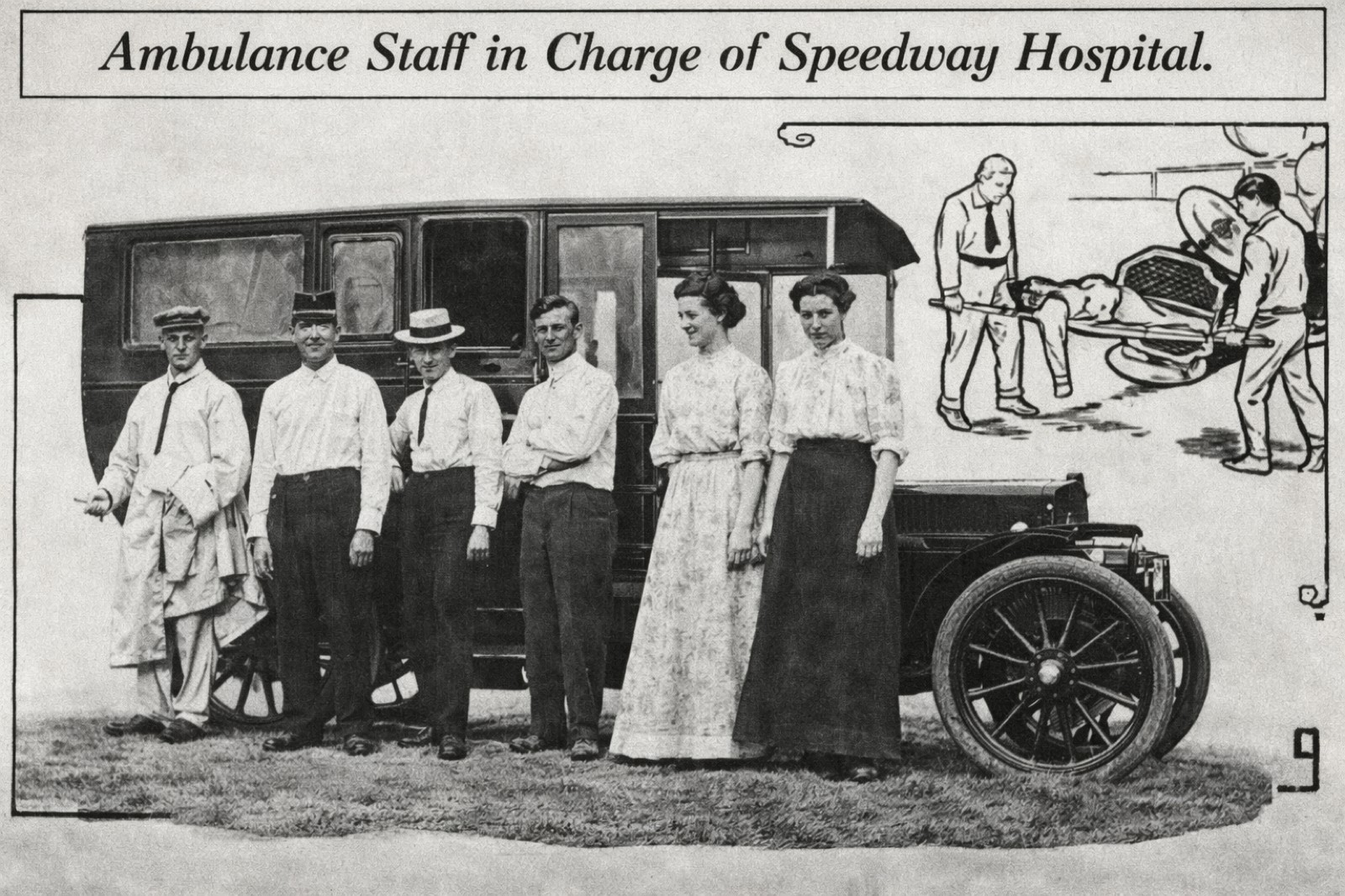
That same year, one of the earliest documented uses of an ambulance at a public event occurred at the inaugural races of the Indianapolis Motor Speedway. This ambulance standby marks a milestone in the integration of EMS with mass gatherings and public safety planning.

1909 Indianapolis Motor Speedway Ambulance Image: Ambulance at the 1909 Indianapolis Motor Speedway – Source: FirstSuperSpeedway.com
Source: Popular Electricity and the World’s Advance (1909)
Source: IMS Medical Coverage Archive (1909)
1910s 1 event

Red Cross Ambulance Programs

The American Red Cross organized formal ambulance services during World War I, helping to professionalize civilian EMS practices and expand organized medical transport in U.S. cities.
WWI Ambulance Drivers
Read more

During World War I, 296 American Red Cross nurses and 127 ambulance drivers gave their lives in service to humanity. Their sacrifices and innovations brought international recognition to American prehospital care and reinforced the need for organized, civilian emergency response infrastructure.

View Red Cross WWI History (PDF) | Read more from The Mining Journal

1914–1918 1 event
National Event

World War I – Advances in Battlefield Medicine

World War I accelerated advancements in trauma care, triage, and evacuation under fire. The conflict saw the expansion of ambulance corps, the widespread use of motorized ambulances, and the development of mobile surgical hospitals. These wartime innovations laid critical groundwork for modern EMS systems and informed civilian ambulance design and field care strategies for decades to follow.
1917 1 event

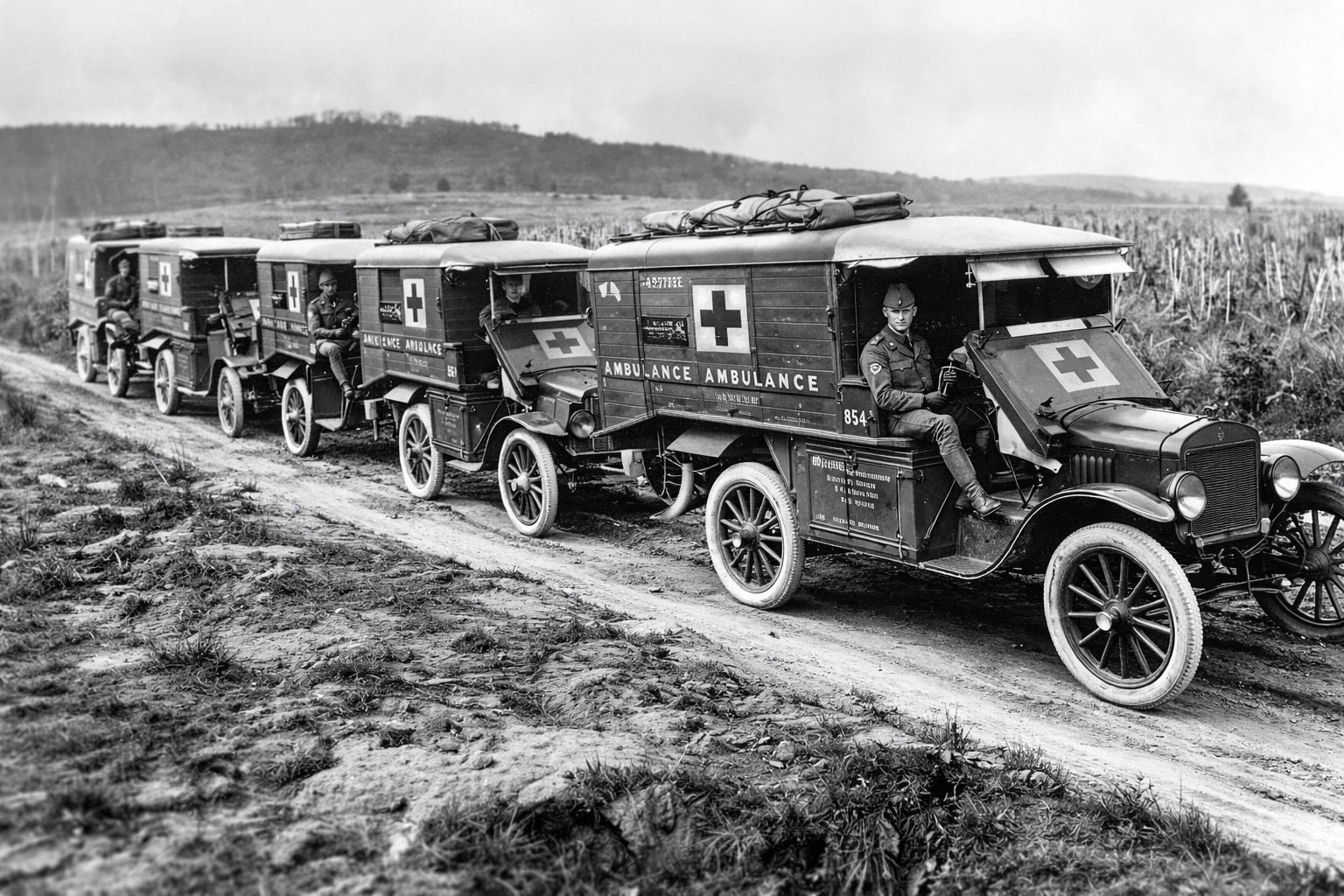
EMS in World War I

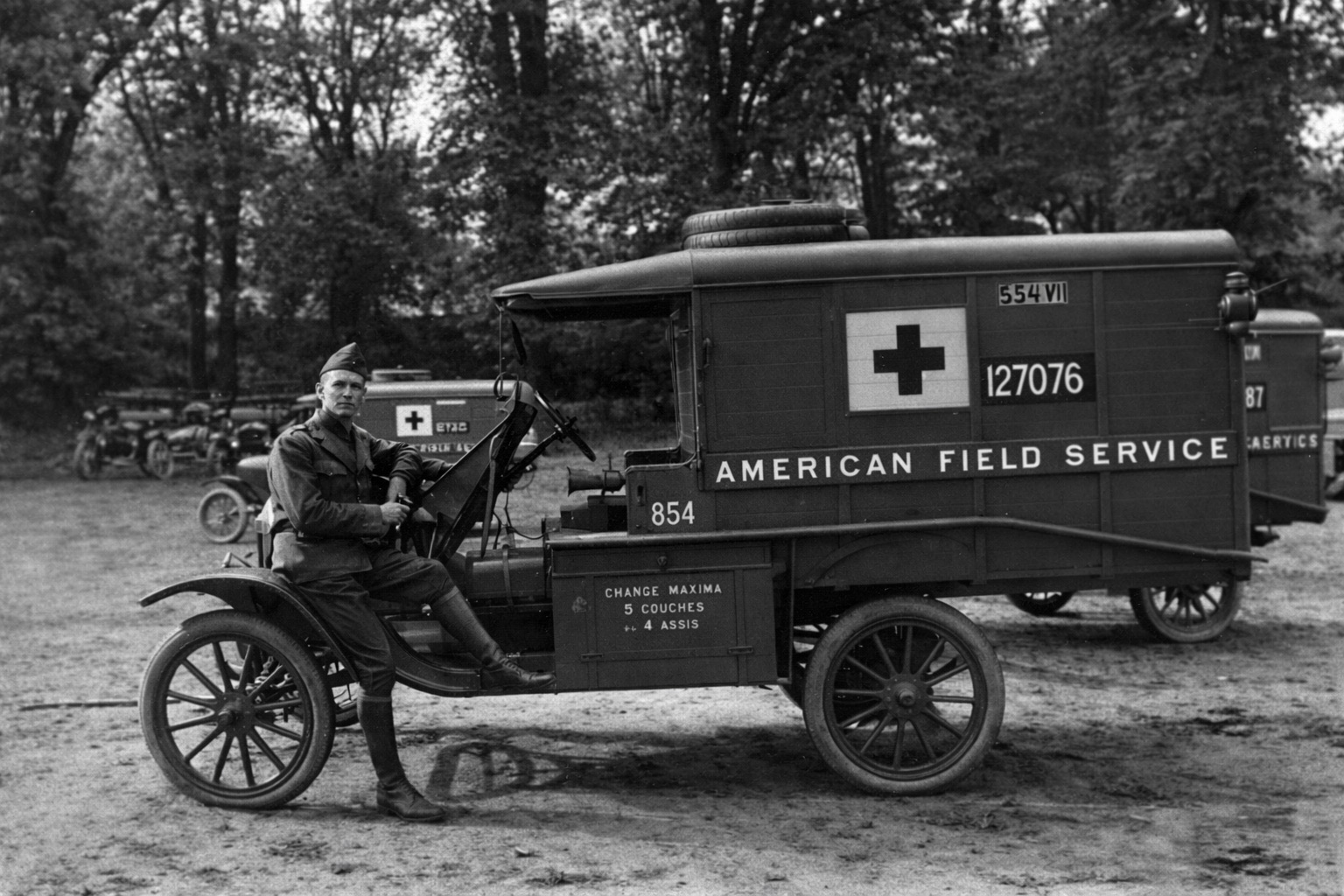
The American Red Cross Ambulance Service rapidly expanded in support of U.S. involvement in World War I. By spring 1917, it operated 46 ambulance units in France and Italy. The Norton-Harjes Ambulance Service—founded in 1914—partnered with the American Red Cross, contributing over 600 American drivers and 300 ambulances by July 1917. The American Field Service also deployed 1,220 ambulances across 31 sections to assist 66 French divisions, laying groundwork for U.S. military and civilian EMS coordination in future conflicts.

View source (U.S. Army Medical Service Corps History)

American Field Service ambulance drivers in Alsace, 1917

Image: American Field Service ambulance drivers in Alsace, 1917 (Wikimedia Commons)

Read more
1918 2 events

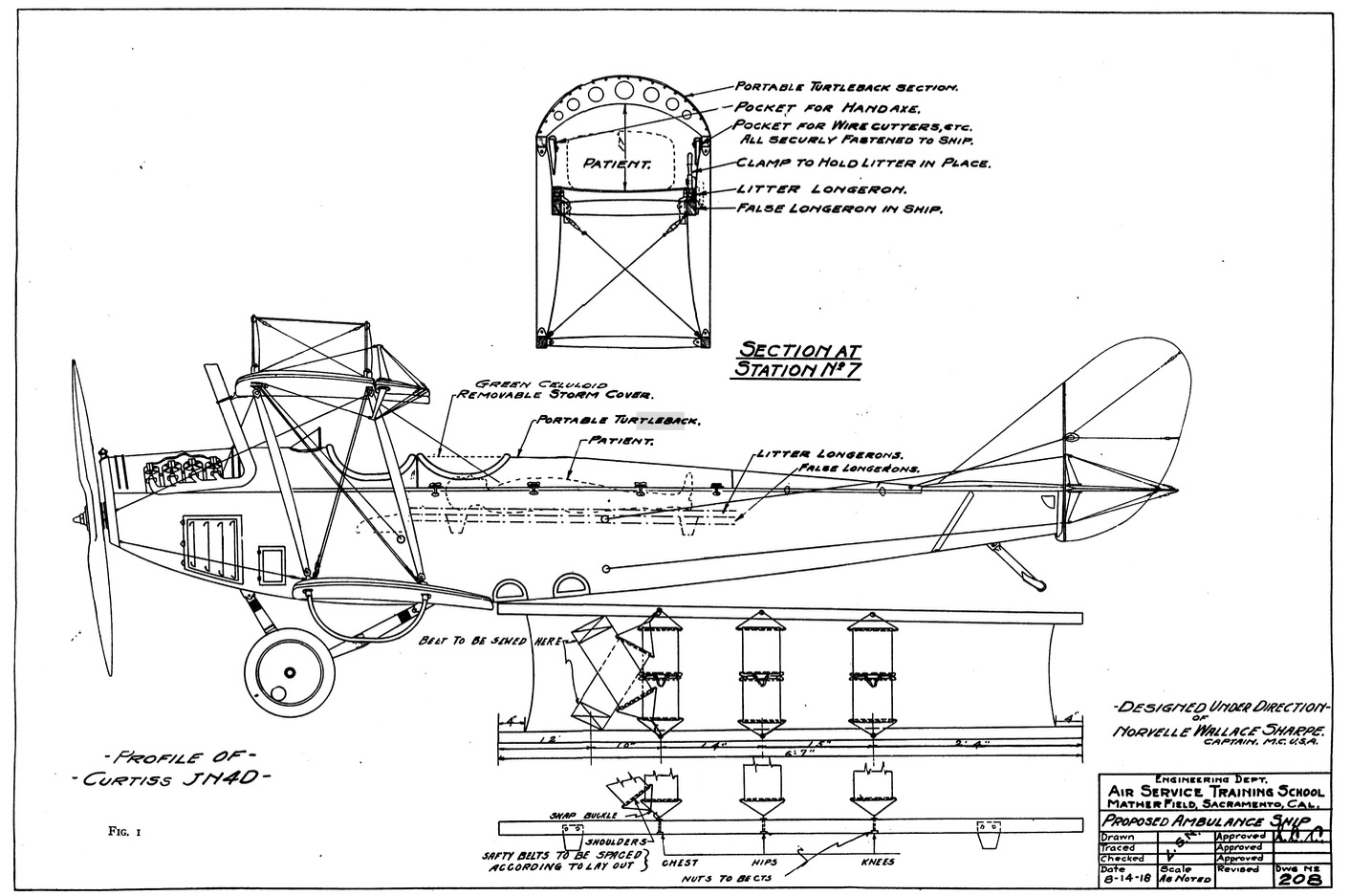
Ambulance Aircraft Proposed Using Modified JN-4D Biplane

As World War I came to a close, a bold proposal was made to convert a Curtiss JN-4D “Jenny” biplane into an airborne ambulance. This vision marked one of the earliest documented efforts to use fixed-wing aircraft for medical evacuation.
1918 Proposed Ambulance Aircraft – Modified JN-4D
Read more

The proposal called for the aircraft to be modified with a forward fuselage compartment large enough to carry a stretcher-bound patient and attendant. Designers emphasized the need for a smooth flight experience to reduce trauma during transport.

The ambulance airplane would be painted entirely white or cream-white for visibility and distinction, and would prominently feature the Geneva Red Cross emblem on the upper and lower wing surfaces and both sides of the fuselage—symbolizing its humanitarian purpose.

This early vision for aerial evacuation predated the formal creation of aeromedical systems by decades. Though the design was never adopted, it foreshadowed the critical role aviation would come to play in battlefield and civilian EMS transport.

Read Full Historical Article (PDF)

Source: Bill Toon, PhD

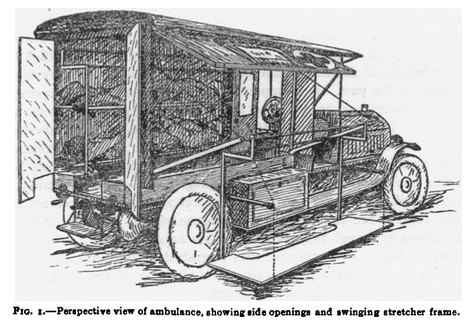
Improved Military Ambulance Proposed for Battlefield Evacuation

In the final year of World War I, a proposal was submitted to enhance the design of U.S. military ambulances. The aim was to improve patient comfort, increase speed and reliability, and modernize battlefield evacuation capabilities.
1918 Improved Military Ambulance Drawing
Read more

The proposed design featured upgraded suspension for smoother transport, a larger patient compartment, improved weather protection, and easier loading/unloading functionality. These changes reflected lessons learned from the muddy, rutted roads of Europe where early ambulance models often failed.

Though not widely implemented before the war's end, the proposal illustrates the growing recognition of ambulance design as a key factor in survival and recovery. It marked a shift toward viewing patient transport as a clinical process—foreshadowing later advances in EMS vehicle engineering.

Read Full Proposal (PDF)

Source: Bill Toon, PhD

1920 1 event

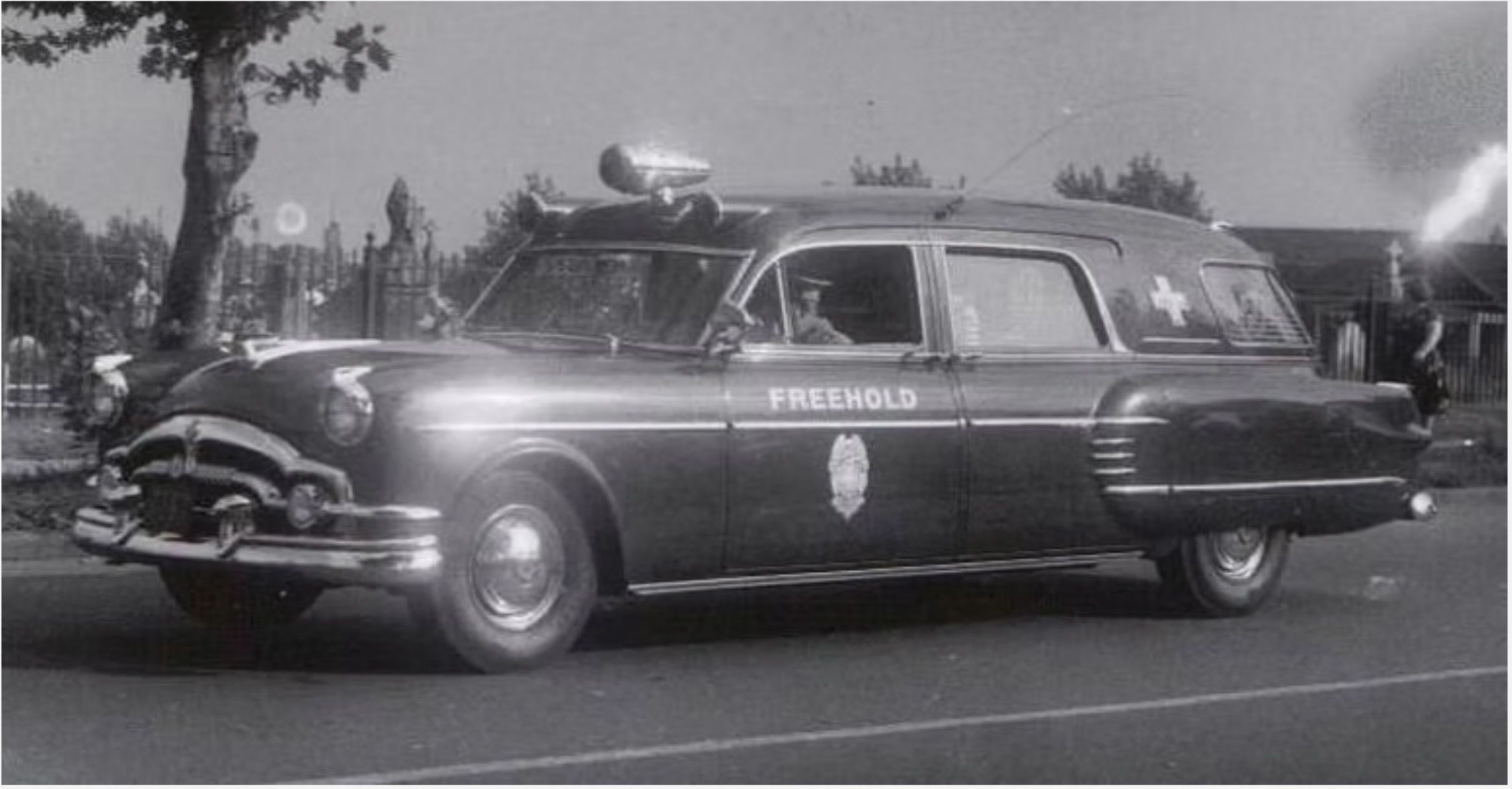
Freehold, NJ Establishes Volunteer Ambulance Service

In 1920, Freehold, New Jersey launched one of the earliest known volunteer, community-based ambulance services in the United States. Though it operated for only 12 years before dissolving in 1932, it stands as an important milestone in the evolution of locally organized emergency response. This predates the formal recognition of Roanoke, Virginia’s sustained Volunteer Rescue Squad established in 1928. The Freehold service was later re-established in 1941, with its first call responding to a heart attack near the Quaker Tavern Inn in Howell. Its early ambulances included a 1933 Cadillac LaSalle and a 1928 model donated by the Van Sant Funeral Home.
Freehold EMS Historical Ambulance
Credit: Freehold EMS
1927 1 event

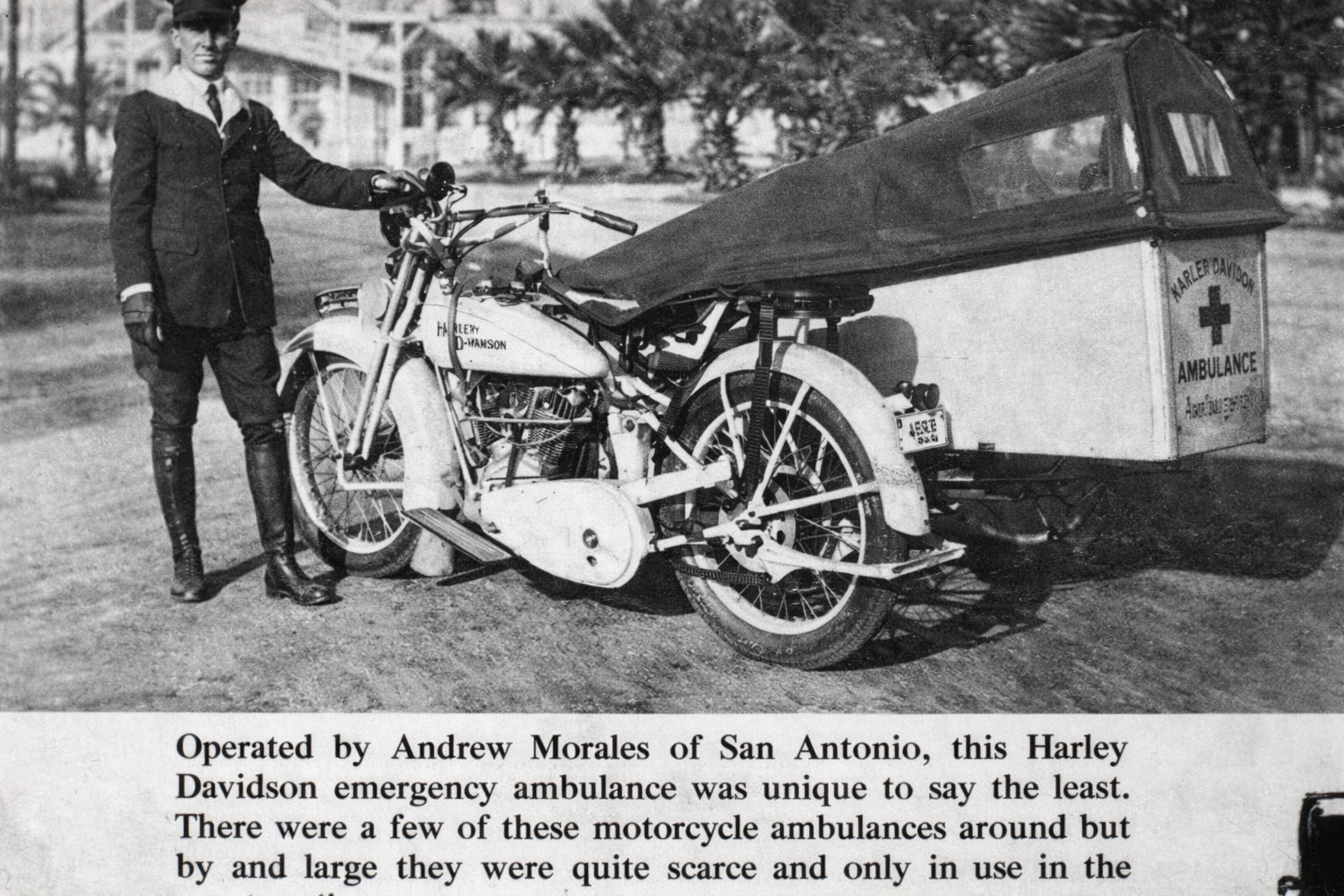
Harley-Davidson Motorcycle Ambulance – San Antonio, TX

In 1927, the city of San Antonio deployed a Harley-Davidson motorcycle outfitted with a custom-built ambulance sidecar. This early innovation in emergency transport reflected the creative efforts of communities to expand EMS capabilities before the widespread use of motorized ambulances. Motorcycle ambulances were especially valued for navigating congested urban areas and responding quickly with minimal personnel.

View high-resolution image from The Portal to Texas History

1927 Harley-Davidson Motorcycle Ambulance – San Antonio Fire Department

Image: San Antonio Motorcycle Ambulance (1927), courtesy of The Portal to Texas History

Read more
1928 2 events

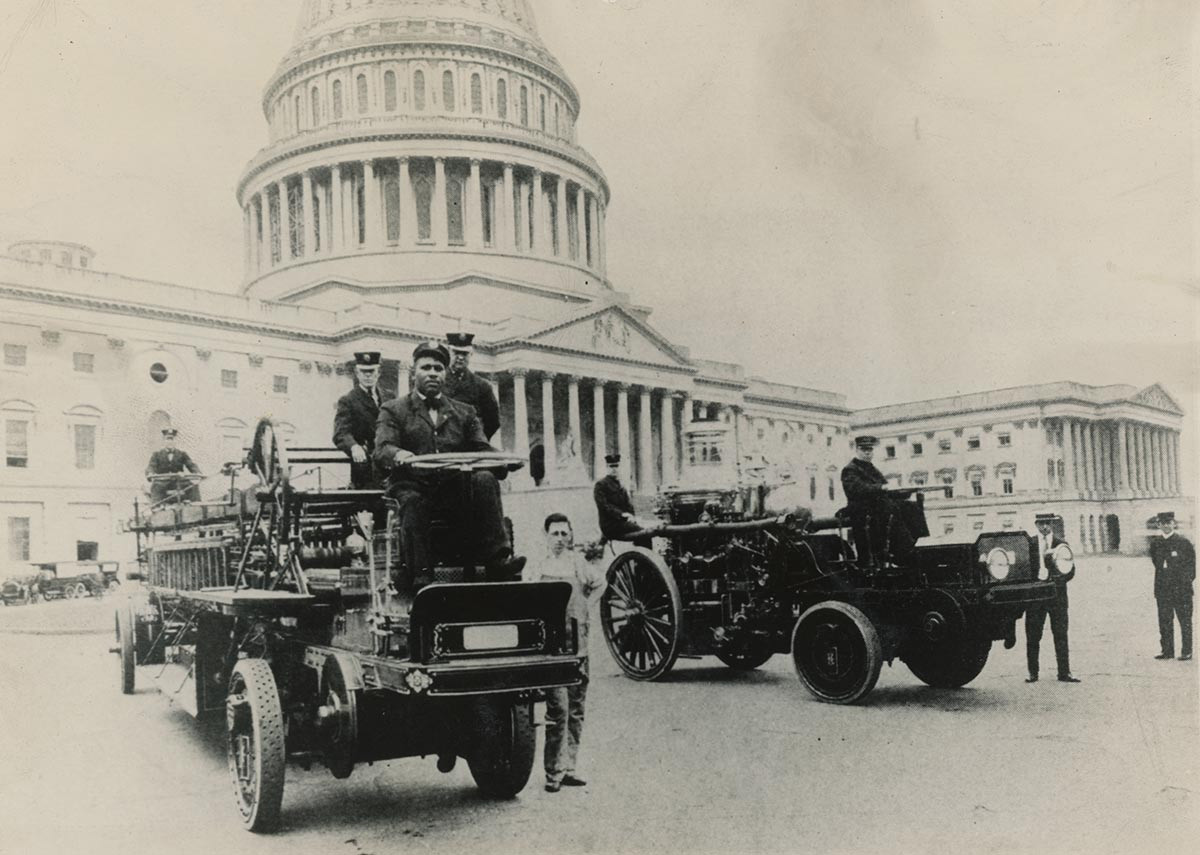
Washington, D.C. Fire Department Adds Ambulance Service

In 1928, the Washington, D.C. Fire Department formally integrated ambulance services into its operations. This milestone represented an early example of a fire-based EMS model, expanding emergency care beyond fire suppression. The move helped pave the way for the now-common integration of EMS and fire services across the United States.
1928 DC Ambulance
Credit: DC Fire & EMS History Project

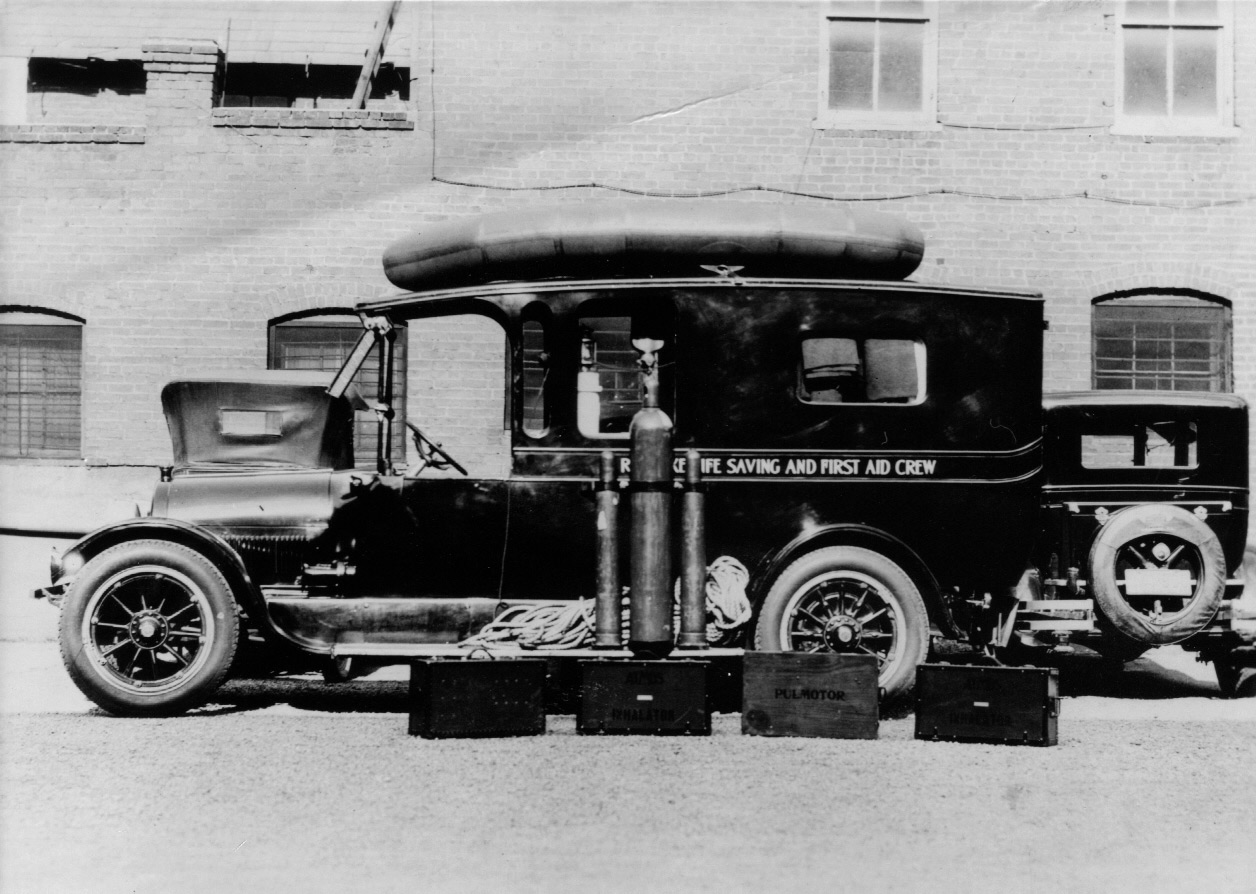
First Volunteer Lifesaving Crew Founded in Roanoke

In 1928, Julian Stanley Wise founded the Roanoke Life Saving and First Aid Crew in Virginia, establishing the first volunteer rescue squad in the United States. Motivated by witnessing a drowning where no trained rescuers were available, Wise mobilized community members to receive medical and rescue training. His initiative institutionalized volunteer EMS response, demonstrating that organized, civilian lifesaving teams could dramatically improve survival rates. The Roanoke model spread rapidly and laid the foundation for America’s vast volunteer EMS network.
Roanoke Virginia Lifesaving & First Aid Crew 1928 image
Read more

The success of the Roanoke crew sparked a national movement, inspiring hundreds of similar volunteer rescue squads throughout the 20th century. Wise’s legacy remains a cornerstone of emergency medical service history.

View historical marker at HMdb.org